



Last Updated: October 22, 2026
Quick Summary
Expensive dog harnesses are worth it if you have a large or strong dog, walk daily, or need escape-proof design, since they last 3-5 years versus 6-12 months for budget options, making them cheaper per use over time. However, they're unnecessary for small, well-behaved dogs with occasional walks.
- A $75 harness lasting 3 years costs about $0.07 per daily walk versus $0.11 for a $30 harness replaced every 9 months
- Premium harnesses use reinforced stitching, high-grade materials like genuine leather, and stainless steel hardware that resists corrosion and breaking
- Budget harnesses typically last 6-12 months while expensive harnesses last 3-5 years or longer with heavy daily use
- Proper fit requires measuring chest girth and body length, with quality brands offering multiple sizes and width variations for different body shapes
- Premium harnesses distribute pressure across the chest and shoulders rather than concentrating it on the neck or spine, improving safety
Table of Contents
- What Makes a Dog Harness Premium
- Cheap vs. Expensive Dog Harness: Where the Real Differences Are
- Dog Harness Safety: Why Design and Materials Matter
- Dog Harness Durability and Long-Term Value
- How to Measure a Dog for a Harness: Getting the Fit Right
- Premium Harness Options: What Aventura Pups Offers
- Is a Premium Harness Worth Your Budget?
- Frequently Asked Questions
What Makes a Dog Harness Premium
A premium dog harness is defined by superior materials, thoughtful design, and construction quality that prioritizes both comfort and durability over basic functionality, which is why expensive dog harnesses justify their cost. The difference between a standard harness and a premium one goes beyond aesthetics, it's about how the harness distributes pressure, how it's built to last, and whether it actually solves the problems dog owners face during daily walks.
Premium harnesses typically feature reinforced stitching, high-grade materials like genuine leather or durable webbing, and hardware that won't corrode or break under stress. According to a 2025 review examining harness design and comfort, non-tightening front-clip harnesses appear to balance discomfort and pulling prevention for dogs that pull, which is a key consideration when evaluating harness quality.
The real premium markers aren't just about price. Many luxury harnesses are expensive rather than premium, they look fancy but lack the engineering to back up the cost. True premium harnesses solve specific problems: they prevent escape, reduce pulling without choking, fit securely without rubbing, and hold up through years of regular use. At Aventura Pups, we focus on harnesses that combine stylish design with functional construction, using materials and hardware that actually perform over time.

Cheap vs. Expensive Dog Harness: Where the Real Differences Are
The gap between a $30 harness and a $75 harness isn't just about brand markup. It's about materials, construction method, and how the harness performs under real conditions.
Budget harnesses typically use thin nylon webbing, basic plastic hardware, and minimal stitching reinforcement. They work fine for short, casual walks with well-behaved dogs. The problem emerges over time: seams fray, hardware breaks, and the fit loosens as the material stretches. For a dog that pulls hard or a owner who walks daily, a budget harness might last 6-12 months before needing replacement.
Expensive harnesses invest in quality at every point. They use thicker, more durable webbing or genuine leather. The stitching is reinforced at stress points, where the leash connects, where straps intersect, where pressure concentrates. Hardware is often brass or stainless steel, not cheap plastic. The result is a harness that lasts 3-5 years or longer, even with heavy daily use.
Aventura Pups harnesses, like our Canvas Step-in Black at $65.00 and Leather Step-in Black at $75.00, offer genuine durability and thoughtful design.

| Harness Type | Typical Price | Expected Lifespan | Best For | Materials |
|---|---|---|---|---|
| Budget | $20-40 | 6-12 months | Occasional walks, puppies | Thin nylon, plastic hardware |
| Mid-Range | $50-75 | 2-4 years | Daily walks, regular use | Quality webbing or leather, reinforced stitching |
| Premium | $100+ | 4+ years | Heavy use, specialized needs | High-grade leather, brass hardware, expert construction |
Dog Harness Safety: Why Design and Materials Matter
Safety in a harness comes down to pressure distribution and structural integrity. A poorly designed harness concentrates force on the dog's neck, spine, or shoulders, areas that can be injured with repeated stress. A well-designed harness spreads that pressure across the broader chest and torso, reducing injury risk during pulling or sudden movements.
Material quality affects safety too. Cheap webbing can fray or tear under stress, potentially breaking during a critical moment. Reinforced stitching prevents seams from separating when a large dog pulls hard. Quality hardware won't snap or bend, so the harness stays secure even during sudden movements. A harness that fails mid-walk puts your dog at risk of escaping into traffic or getting injured.
Premium harnesses also consider escape prevention, a critical safety feature for anxious or escape-prone dogs. The Aventura Pups M/F Harness Blue, priced at $39.99, includes patented escape-free functionality that keeps dogs secure while the fleece lining and memory foam padding provide comfort and warmth. For dogs that need extra security, this combination of safety features and comfort makes a real difference.
Dog Harness Durability and Long-Term Value
Durability is where expensive harnesses justify their cost most clearly. A harness that lasts five years instead of one is genuinely cheaper over time, even if the upfront price is higher.
Durability depends on material quality and construction. Genuine leather, when properly treated, can improve with age and use, becoming more supple and conforming better to the dog's body. High-quality webbing resists fraying and holds its shape. Reinforced stitching at stress points prevents common seam failures. Stainless steel or brass hardware resists rust and corrosion, unlike cheap plastic hardware that can become brittle and snap.
The construction method matters too. Double or triple stitching at connection points, where the leash attaches and where straps meet, can prevent unraveling.
Total cost of ownership is the real measure. A $40 harness replaced annually costs $400 over ten years. A $75 harness lasting five years costs $150 total. The expensive option is three times cheaper when you account for replacement frequency. This is especially true for owners with strong dogs or daily walking routines.
How to Measure a Dog for a Harness: Getting the Fit Right
Proper fit is essential for both comfort and safety. A harness that's too loose can slip off or allow the dog to escape. One that's too tight restricts movement and causes discomfort.
Start by measuring your dog's girth, the circumference around the widest part of the chest, just behind the front legs. Use a soft measuring tape and keep it snug but not tight. Measure while your dog is standing naturally. Write down the measurement in inches.
Next, measure the length from the base of the neck to the base of the tail. This helps determine which harness size is appropriate for your dog's body type. Some harnesses are sized by weight range, while others use girth measurements, so check the specific product's sizing guide.
Most quality harnesses offer multiple size options. Aventura Pups Canvas Step-in Black harnesses, for example, come in sizes from Teacup (8"-15" girth, 2-5 lbs) through Large (18"-26" girth, 20-25 lbs), with width variations to maintain proper fit across different body types.
When the harness arrives, try it on your dog and check the fit. You should be able to fit one finger under the straps comfortably. The harness should sit snugly without gaps, but not so tight that it restricts movement or causes discomfort.
Premium Harness Options: What Aventura Pups Offers
Our harness collection balances style, comfort, and durability across a range of price points and designs. Each option is selected for quality construction and thoughtful design that solves real problems dog owners face.
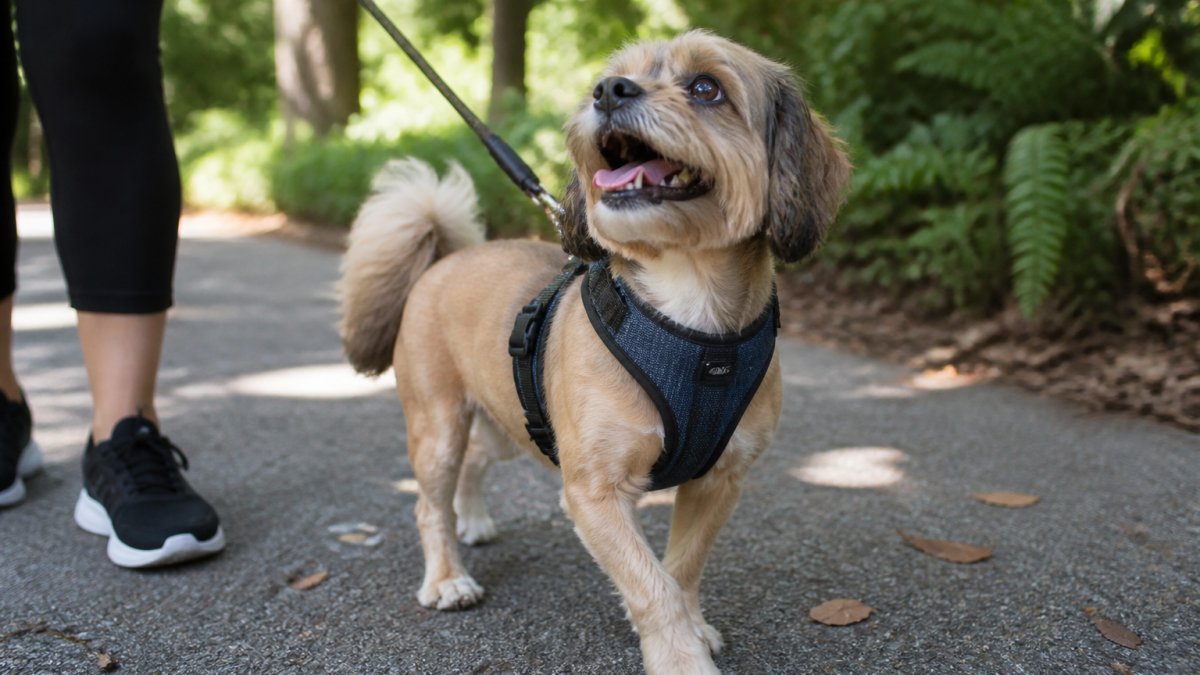
The M/F Harness Blue at $39.99 is our entry point for owners seeking quality without premium pricing. Memory foam padding reduces force when your dog pulls, while the fleece lining provides warmth during cooler months.
The Mesh BLACK at $65.00 offers flexibility and simplicity. The push-button slider closure adjusts to a just-right fit without buckles, making it excellent for dogs with sizing challenges, escape artists, or very small pets.

The Canvas Step-in Black at $65.00 uses highly durable packcloth fabric and sliding toggles for a custom, chic fit.
The Leather Step-in Black at $75.00 combines style with practical durability. Made from high-quality leather treated for water resistance, it includes an attached leash in matching material, eliminating the need for separate purchases.
The Tre Ponti BK at $69.99 is engineered for dogs with large, wide, or deep chests. The adjustable belly strap diverts pressure off the spine and trachea, reducing strain during walks.
Is a Premium Harness Worth Your Budget?
The answer depends on your dog, your walking routine, and how you define value.
A premium harness is worth the investment if you have a large or strong dog that pulls hard. Budget harnesses simply aren't built to handle that stress safely, they fail, seams tear, and hardware breaks.
Premium harnesses are also worth it if you walk daily. The cost per use drops dramatically over time.
They're worth it if your dog is anxious or has a history of escaping. Escape-free design and secure construction provide peace of mind that cheap harnesses can't match.
However, a premium harness isn't necessary if you have a small, well-behaved dog that walks occasionally. A budget harness works fine for casual use. The durability advantage doesn't matter if the harness sees light use.
The real question isn't whether expensive dog harnesses are worth it in general, it's whether they're worth it for your specific situation. Consider your dog's size, strength, and behavior.
At Aventura Pups, we believe the best harness is one that keeps your dog safe, comfortable, and secure while fitting your budget.
Choosing the right harness for your dog doesn't have to mean overspending on unnecessary luxury. What it does mean is investing in quality construction, thoughtful design, and materials that actually hold up under real-world use.
Frequently Asked Questions
Are expensive dog harnesses more comfortable for dogs?
Premium harnesses often feature better pressure distribution and softer materials, which can reduce strain on the neck and spine. However, comfort depends on proper fit and your dog's individual needs. An expensive harness that doesn't fit well won't be more comfortable than an affordable option that does. The key is finding a harness designed for your dog's chest size and build, regardless of price.
What should I look for when buying a dog harness?
Prioritize fit, safety features, and durability. Measure your dog's girth and chest width accurately to ensure a snug but comfortable fit. Look for adjustable straps, reflective stitching for visibility, and materials that distribute pressure evenly across the chest and shoulders rather than concentrating it on the neck. Check whether the harness has a step-in or buckle design that works for your lifestyle. Quality stitching, reinforced hardware, and escape-proof closures matter more than brand name alone.
How long should a good dog harness last?
A well-made harness can last 2-5 years or longer with proper care, depending on use frequency and material quality. Premium harnesses made from durable fabrics like packcloth or high-quality leather, with reinforced stitching and brass hardware, typically outlast budget options. Water-resistant leather and treated materials extend lifespan. Regular cleaning and storage away from direct sunlight preserve both function and appearance. Replacement frequency depends on your dog's size, activity level, and whether the harness fits properly throughout its life.
Are cheap dog harnesses safe for daily walks?
Safety depends on design and fit, not price alone. A budget harness with proper pressure distribution, secure closures, and good fit can be safe for daily walks. However, cheaper harnesses may use lower-quality stitching, weak hardware, or materials that don't distribute pressure evenly, increasing injury risk. Harnesses are generally considered safer than collars because they avoid direct strain on the neck and trachea. Whether you choose an affordable or premium option, verify that it has a secure back clip or front clip, adjustable straps, and fits snugly without chafing.
What's the difference between a harness and a collar for walking a dog?
Harnesses distribute pressure across the chest and shoulders, avoiding direct strain on the neck and trachea. Harnesses are generally considered safer than collars for this reason. Collars concentrate force on the neck, which can cause injury during pulling or sudden movements. Harnesses also provide better control and are especially important for dogs that pull, have respiratory sensitivity, or are prone to escape. For daily walks, a well-fitted harness offers superior safety and comfort compared to a collar alone.

