



Table of Contents
- What Makes a Swarovski Crystal Dog Collar Durable
- Swarovski Crystal Collar Water Resistance and Material Choice
- How to Clean a Crystal Dog Collar Without Damaging Stones
- Dog Collar Lifespan: Realistic Expectations and Activity Limits
- Crystal Dog Collar Quality Checklist: Inspection Steps
- Sizing and Fit Impact on Durability
- Frequently Asked Questions
Last Updated: October 13, 2026
What Makes a Swarovski Crystal Dog Collar Durable
A crystal dog collar durability depends on three factors: crystal quality, hardware strength, and how well stones stay attached during wear. A handmade collar with genuine Swarovski crystals should last years, not months, but durability isn't automatic. It comes down to construction details most people overlook.
A collar that sheds stones after two weeks isn't worth the price. The real measure of durability is whether it survives active play, regular washing, and daily friction without losing its sparkle.
Crystal Quality and Stone Retention
Genuine Swarovski crystals resist chipping and fading far better than imitation stones, but they're not indestructible. What fails first is the setting, the metal rim holding the stone.
A quality setting uses a metal rim pressed firmly enough to grip the crystal without crushing it. Loose settings let stones spin and fall out; overly tight ones can crack the crystal.
The best collars use individual crystal keepers, small metal cups holding each stone independently, which distributes stress evenly and prevents one loose stone from triggering a chain reaction. Cheaper collars use a continuous metal strip; when one stone loosens, it pressures its neighbors.
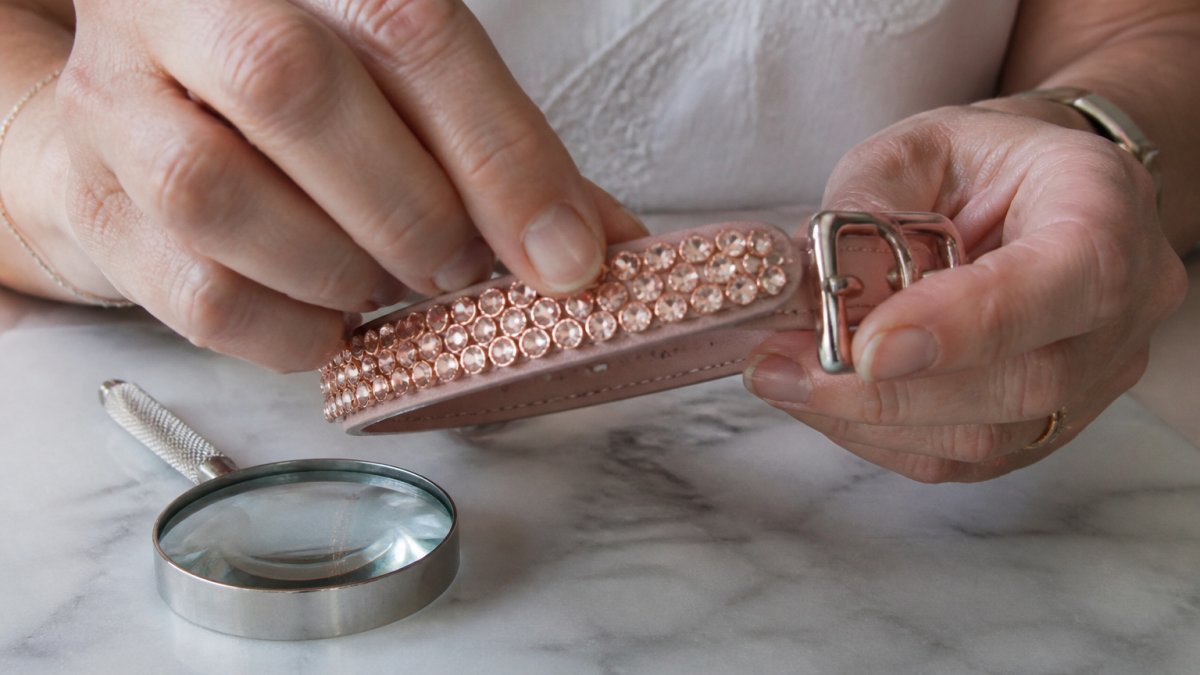
Check the back of the collar: you should see individual metal settings, not a continuous band. Each crystal should feel snug, with a tiny visible gap between metal and stone.
Hardware and Fastening Systems
The hardware, buckles, D-rings, and clasps, bears constant stress as your dog pulls, tugs, and rolls. Cheap plated metal will rust or break within months.
Look for stainless steel hardware with strong breaking load ratings; it resists rust and corrosion far better than nickel-plated or painted metal. The buckle should feel solid and snap shut with a firm click.
Attachment points matter as much as the hardware. Weak stitching or loose rivets let hardware tear away, so quality collars use reinforced stitching and multiple attachment points per piece.
Test the D-ring by pulling hard, it should not move or flex. If it wobbles, the collar won't hold up; a dog pulling on a leash puts enormous force on that single ring.
Swarovski Crystal Collar Water Resistance and Material Choice
Water resistance is where many crystal collars fail. Moisture seeps into metal settings, causing rust that weakens the grip on stones, and a collar that stays damp deteriorates rapidly.

Collar material determines water resistance more than anything else. Leather is beautiful but absorbs water, needs regular conditioning, and dries slowly. Waterproof alternatives like Beta Biothane shed water instantly and resist mold and mildew.
Leather vs. Waterproof Alternatives
Genuine leather is traditional and elegant, softening with age. But it's porous: water soaks in, mud sticks, and after swimming or wet grass it takes hours to dry, moisture sitting against metal settings, promoting rust.
Leather also needs regular conditioning or it cracks and becomes brittle, and conditioners attract dirt that sticks to the crystals. For active or outdoor dogs, leather creates more maintenance headaches than it solves.
Waterproof alternatives like Beta Biothane solve these problems. This vegan leather, made from polyurethane and polyester, repels water completely, washes clean instantly, dries in minutes, never needs conditioning, and won't mold or mildew even in humid climates.
The trade-off is aesthetic: leather looks more luxurious, but if your dog actually wears the collar outdoors, waterproof materials protect your investment far better.
Beta Biothane and Vegan Leather Performance
Beta Biothane has become the standard for durable, crystal-studded collars because it solves the water problem without sacrificing style.
The material is incredibly durable: it won't tear or puncture easily, resists UV damage so colors don't fade, and handles temperature extremes without cracking or getting sticky.
Aventura Pups offers Biothane crystal collars in multiple styles, starting at $59.99. These collars combine genuine Swarovski crystals with waterproof Beta Biothane material. The combination gives you durability without the maintenance burden of leather.
Vegan leather alternatives vary widely. Look for thick, high-grade vegan leather at least 1.5mm thick; thin vegan leather wears through quickly, especially around stress points like the buckle attachment.
How to Clean a Crystal Dog Collar Without Damaging Stones
Cleaning is where many people accidentally damage their crystal collars. Harsh scrubbing, hot water, and abrasive cleaners dull the crystals and weaken metal settings. A few simple steps keep your collar looking new.
Safe Cleaning Methods and Products
Use lukewarm water and a soft cloth. Never use hot water, which can weaken the adhesive holding some stones, and avoid harsh soaps or chemicals that damage both crystals and collar material.
For routine cleaning, mix mild dish soap with lukewarm water, dip in a soft microfiber cloth, and gently wipe the collar, paying attention to the spaces between crystals where dirt accumulates. A soft-bristled toothbrush cleans around settings without pressing directly on stones.
For stubborn dirt, soak the collar in soapy water for 10 minutes before wiping, this loosens dirt without scrubbing. Never soak leather collars more than a few minutes; extended water exposure damages the material.
Avoid these products entirely:
- Bleach or chlorine-based cleaners
- Vinegar or acidic solutions
- Abrasive scrubbers or steel wool
- High-pressure water sprays
- Ultrasonic cleaners
These can cloud crystals, damage metal settings, or weaken the collar material. The gentle approach takes a few minutes longer but preserves appearance and durability.
Drying and Storage Best Practices
Pat the collar dry with a clean cloth immediately after washing, moisture sitting against metal settings promotes rust. If it has leather components, condition lightly with a pet-safe leather conditioner.
Store the collar in a cool, dry place away from direct sunlight, which can fade crystals and damage material. A drawer or closet works; avoid damp basements or humid bathrooms.
When your dog isn't wearing the collar, remove it rather than leaving it on all day. This lets the material dry fully, reduces hardware stress, and prevents catching it on objects, which can bend hardware or loosen stones.
Dog Collar Lifespan: Realistic Expectations and Activity Limits
How long your crystal collar lasts depends on how your dog uses it. A small dog wearing it for occasional outings might get 3-5 years; an active dog that swims, plays rough, and wears it constantly might see failure within a year.
Wear Patterns for Active Dogs vs. Occasional Wear
Active dogs put constant stress on collars: every leash pull, roll in the grass, and splash adds wear. Hardware bends, material stretches, and crystals loosen from constant flexing.
If your dog is highly active, expect more frequent maintenance and replacement. Crystal collars work best for occasional wear, photos, outings, or special events, not 24/7 use with a high-energy dog.
Dogs wearing collars mainly for leash walks and light outdoor time see much longer life: less stress, minimal moisture exposure, and crystals that stay secure for years.
Material choice matters significantly for active dogs. Beta Biothane holds up far better than leather, resisting damage from mud, water, and intense use, while leather deteriorates quickly.
When to Replace vs. Repair
Some damage is repairable: a loose stone can be reset by a craftsperson, a bent D-ring replaced, and a small tear patched.
Other damage means replacement: resetting multiple loose or missing stones costs nearly as much as a new collar, cracked or torn material isn't practical to repair, and severely corroded or bent hardware is safer replaced.
Get a quote before investing in repairs. Many cost 50-70% of a new collar's price, so for collars under $100 replacement often makes more sense; for custom or high-end collars, repair becomes worthwhile.
Crystal Dog Collar Quality Checklist: Inspection Steps
Durability starts before you buy. Knowing what to inspect separates collars that last from those that fail quickly.
Before Purchase: What to Look For
Examine the crystal settings closely: each stone should sit in an individual metal cup or rim.
Check the hardware: heavy, solid, and smooth, with the bright, consistent finish of stainless steel rather than dull or worn plating. Open and close the buckle several times, it should snap firmly every time without hesitation or wobbling.
Inspect the stitching for even, tight stitches with no gaps or loose threads, reinforced at stress points where hardware attaches. Pull gently in different directions; it should feel solid with no flexing.
Feel the material: leather should be soft but substantial, Beta Biothane smooth and flexible without feeling thin or flimsy. Check for visible damage, discoloration, or defects.
Ask about crystal quality. Genuine Swarovski crystals are clearly labeled; imitation stones are cheaper but far less durable. The seller should verify the crystal type.
During Regular Wear: Monthly Inspection
Once the collar is in use, inspect it monthly to catch problems early.
Check each stone by pressing gently, none should move or spin.
Inspect hardware for rust or corrosion. Stainless steel shouldn't rust, but plated hardware shows discoloration or rough spots, if rust appears, replace it.
Look at the stitching: new loose threads or gaps mean it's failing, usually starting at stress points. Address it before the stitching separates completely.
Check the material for cracks, tears, or discoloration. Small damage signals the material is breaking down, plan for replacement within a few months if visible.
Examine attachment points where hardware meets the collar. They should be tight with no separation; gaps or loose rivets mean the hardware is pulling away.
| Inspection Point | What to Check | Healthy Sign | Warning Sign |
|---|---|---|---|
| Crystal settings | Individual metal cups | Smooth, tight fit | Loose stones or continuous strip |
| Hardware | Buckle and D-ring | Solid, stainless steel | Dull finish, rust, wobbling |
| Stitching | Thread quality and gaps | Even, tight, reinforced | Loose threads, gaps at stress points |
| Collar material | Cracks, tears, wear | Smooth, intact surface | Visible damage, discoloration |
| Attachment points | Hardware-to-collar connection | Tight, no gaps | Separation, loose rivets |
Sizing and Fit Impact on Durability
Fit affects durability more than most people realize. Too tight puts constant stress on material and hardware; too loose allows excessive movement and flexing.
Measure your dog's neck with a soft tape, snug but not tight, you should fit one finger under it. This is the true neck measurement.
Add one inch for collar size, giving comfortable room while keeping it secure. A too-loose collar slides around, creating friction and stress on attachment points.
The collar should sit flat without twisting or riding up.
Proper fit reduces stress on every component: less strain on hardware, no excessive stretching, and secure crystals.
A durable Swarovski crystal dog collar starts with quality construction, genuine crystals, stainless steel hardware, and secure stone settings, but durability is a partnership with how you care for it.
Frequently Asked Questions
How durable are Swarovski crystals on a dog collar?
Swarovski crystals are hard and resistant to chipping when properly set, but durability depends on attachment method and the collar's overall construction. Crystals glued into metal rims with secure bezels resist stone loss better than those in loose settings. Active dogs and frequent wear accelerate wear and tear. With proper care and inspection, a well-made Swarovski crystal dog collar can last 1-3 years of regular use, though decorative collars worn occasionally may last longer.
Can a Swarovski crystal dog collar get wet?
Traditional leather collars with Swarovski crystals should be dried promptly after water exposure to prevent leather damage and clouding of stones. Waterproof alternatives like Beta Biothane offer better water resistance and are mess, mud, and stink resistant, making them suitable for dogs that swim or play outdoors frequently. Even with waterproof materials, rinse crystals gently and dry thoroughly to maintain clarity and prevent mineral buildup.
How should I clean a crystal dog collar?
Use lukewarm water and a soft cloth to gently wipe the collar. For stubborn dirt, add a small drop of mild dish soap to water. Avoid soaking leather collars; instead, dampen the cloth and spot-clean. Dry immediately with a soft towel. Never use harsh chemicals, abrasive scrubbers, or ultrasonic cleaners, which can loosen stones or damage the material. For waterproof Biothane collars, a quick rinse and air-dry are sufficient.
How often should I inspect a crystal dog collar for loose crystals or worn hardware?
Inspect your dog's collar monthly, or more frequently if your dog is active or swims regularly. Check that all crystals are secure by gently pressing each stone, it should not wiggle. Examine the buckle, barrette, or fastening mechanism for rust, corrosion, or wear. Look for any cracks in the leather or material. Early detection of loose stones or weak hardware allows for repair before complete failure, extending the collar's lifespan.
