



Table of Contents
- Why Ultrasuede Dog Apparel Is a Game-Changer for Pet Parents
- Key Benefits of Ultrasuede Dog Apparel
- How to Measure Your Dog for Clothes
- Why Machine Washable Dog Accessories Matter
- Ultrasuede vs Microsuede for Pets: What's the Difference?
- Pros and Cons of Ultrasuede Dog Apparel
- Frequently Asked Questions
Last Updated: September 13, 2026
Why Ultrasuede Dog Apparel Is a Game-Changer for Pet Parents
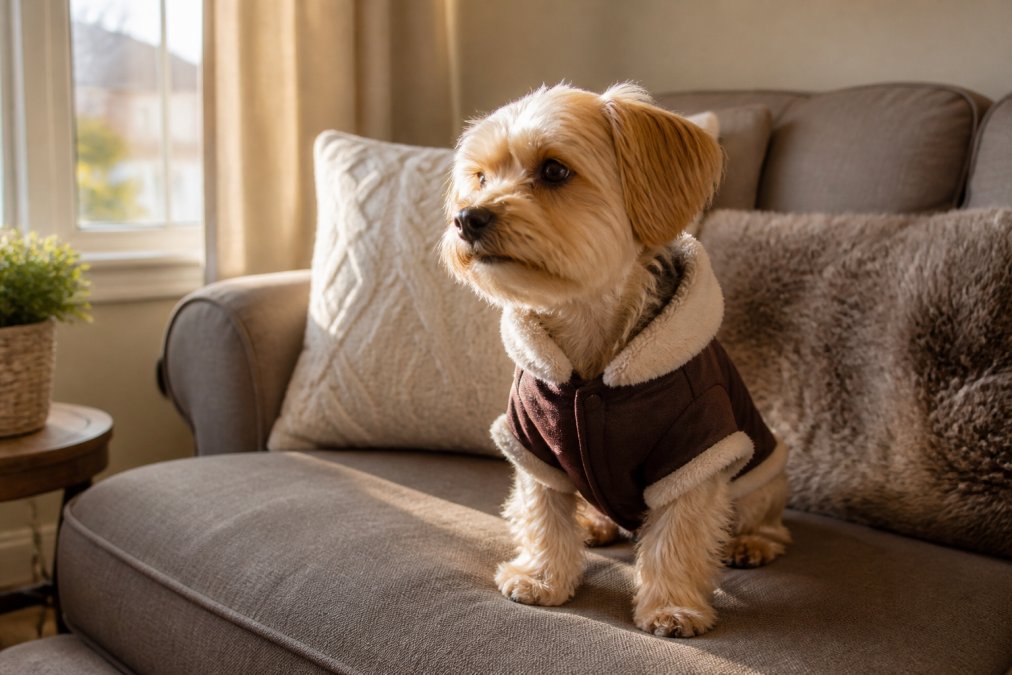
Ultrasuede dog apparel is clothing and accessories made from a Japanese-engineered, non-woven synthetic suede that resists stains, holds its color, and survives the washing machine (britannica.com). For owners of small and medium breeds, it solves the two problems that ruin most dog clothing: fraying seams and fading fabric.
Below, we break down what makes this material different, how to measure your dog correctly, and where it falls short. The five benefits we cover explain why this fabric has become the standard for luxury pet gear.
Key Benefits of Ultrasuede Dog Apparel
The core benefits of Ultrasuede dog apparel come down to three things: it holds up, it feels good against skin and fur, and it cleans up without special handling. Each one matters more than the last.
Durability and Strength
High fiber density gives Ultrasuede its tensile strength. The non-woven construction locks fibers together rather than weaving them, so edges resist fraying even after repeated wear (textileschool.com). Synthetic suede also handles scratch resistance well, which matters for dogs that brush against crates, car seats, and doorframes.
A common mistake is judging durability by thickness alone. A thin, dense fabric outlasts a thick, loosely bonded one every time.
Comfort and Softness
The soft-touch finish is what owners notice first. Unlike stiff nylon or coated canvas, this fabric drapes and moves with the dog instead of fighting it. Moisture permeability lets body heat escape, so a jacket works on a cool morning without turning into a sauna on the walk home (Moisture Vapor Permeability and Thermal Wear Comfort of Ecofriendly Fiber-Embedded Woven...).
Breathability matters most for small breeds with dense coats. Trapped heat is the reason many dogs paw at clothing within minutes.
Ease of Care and Maintenance
Machine washable construction is the practical payoff. Most pieces go in a cold, gentle cycle and air dry flat. Colorfastness keeps dyes from bleeding onto lighter fur or other laundry.
How to Measure Your Dog for Clothes
Measuring your dog for clothes takes three numbers: neck circumference, chest girth, and back length. Get those right and almost any well-made pattern will fit.
Use a soft tape measure and keep it snug, not tight. Measure the chest at the widest point behind the front legs, the neck where a collar naturally sits, and the back from the base of the neck to the tail.
- Neck: around the fullest part, plus one finger of slack
- Chest: the widest point behind the front legs, the single most important number
- Back length: base of neck to base of tail, standing
- Weight: useful for carriers, not for apparel sizing
Dogs between sizes are the hardest case. Size up when the chest measurement falls between ranges, then check that the leg openings still allow free movement. A garment that restricts the front legs will be rejected by the dog within minutes.
Why Machine Washable Dog Accessories Matter
Machine washable dog accessories turn a chore into a routine. Dogs roll in everything, and clothing that requires hand washing or dry cleaning gets worn less and retired sooner. That much every pet retailer will tell you. What they rarely explain is why washability is a durability feature, not just a convenience one.
The mechanism: soil is abrasive
Dirt, sand, and dried mud are abrasive at the fiber level. When grit stays embedded in a fabric, every flex of the garment grinds those particles against the fibers. Over months, that mechanical wear, not the washing, is what breaks down cheap synthetic suede. A piece you can actually clean removes the abrasive load before it does damage. That is the real reason machine washability extends lifespan.
What "machine washable" should mean on a label
Not every washable claim is equal. For synthetic suede pet gear, look for these specifics:
- Cold water, gentle cycle, heat is what distorts the non-woven structure, not agitation.
- Air dry flat, a dryer's sustained heat stiffens the soft-touch finish and can shrink the backing.
- No fabric softener, softener coats the microfibers and reduces moisture permeability, which is the property that keeps a dog from overheating.
- No bleach or enzyme cleaners, these break down the polyurethane binder that holds the non-woven fibers together.
A garment that survives 50+ cold washes without pilling or fading is doing something a hand-wash-only piece cannot: it stays in rotation.
Seasonal performance: the angle most guides skip
Washability matters differently across the year, and this is where generic advice falls short.
- Summer: Dogs sweat mainly through their paw pads and pant to cool. A breathable synthetic suede vest that can be rinsed after a muddy or dusty walk keeps pores and skin clear. Heavy, non-breathable fabrics trap heat and moisture, the opposite of what a dog needs in July.
- Winter: Road salt and ice-melt residue are the real threat to both fabric and paw-adjacent skin. A piece you can machine wash after every salted sidewalk walk removes the residue before it dries into the fibers. Hand-wash-only gear often gets worn dirty for weeks, and the salt slowly degrades the finish.
- Spring and fall: Mud season. The stain resistance that lets you rinse rather than scrub is what keeps a light-colored jacket presentable through daily wet walks.
Travel and boarding
For owners who travel or board their dogs, washability is a logistics feature. A leash or jacket that goes in with the regular laundry means one less special-care item in the bag. Gear that needs dry cleaning tends to stay home, and a dog without its familiar jacket on a trip is a stressed dog.
Our Suede Fuchsia 5FT leash is built for exactly this: a soft-touch finish, a 360-degree rotating clasp that prevents twisting, and a comfortable loop handle. It wipes clean between washes and holds its color through repeated cold-water cycles.

Ultrasuede vs Microsuede for Pets: What's the Difference?
Ultrasuede and microsuede differ mainly in fiber density and construction quality. Both are synthetic suede textiles, but they are not interchangeable for pet gear, and neither is interchangeable with traditional leather, which is the comparison most buyers are actually making.
Ultrasuede vs generic microsuede
Ultrasuede is a branded, non-woven material made from ultra-fine microfibers with a dense, uniform structure. It resists pilling, fraying, and staining better than most microfiber fabrics.
Microsuede is a broader category. It covers any suede-like fabric made from microfiber polyester, and quality varies enormously between manufacturers. Cheaper versions pill quickly and lose shape after washing.
| Feature | Ultrasuede | Generic Microsuede |
|---|---|---|
| Construction | Non-woven, dense | Varies widely |
| Anti-pilling | High | Inconsistent |
| Fray resistance | Strong edges | Often frays |
| Color retention | Excellent | Moderate |
| Best for | Daily-wear apparel | Light-use covers |
The practical takeaway: if a product just says "microsuede," ask about fiber density and construction. If it says Ultrasuede, the specification is already set.
Ultrasuede vs traditional leather for dog gear
This is the comparison that actually decides a purchase for most owners, and it rarely gets an honest treatment.
| Factor | Ultrasuede | Traditional Leather |
|---|---|---|
| Weight | Light, drapes with the dog | Heavy, can restrict movement |
| Care | Machine washable, cold | Condition, spot-clean, avoid soaking |
| Water response | Resists stains, dries soft | Stiffens and can crack when wet |
| Odor | Resists odor, rinses clean | Absorbs odor over time |
| Allergens | Synthetic, low dander retention | Natural material, varies by tanning |
| Color options | Wide, holds vibrancy | Limited, fades and patinas |
| Cost | Lower per piece, longer rotation | Higher, needs replacement sooner |
Leather has a place, it is tough and ages into a look some owners love. But for a dog that wears a jacket daily, the care burden and water sensitivity of leather usually lose to a washable synthetic suede.
Sustainability and eco-impact
The environmental angle is where most pet-gear guides go quiet, and it is worth stating plainly.
- Animal-leather production involves raising livestock, tanning (often with chromium or other chemical processes), and a resource-intensive supply chain. Tanning wastewater is a recognized environmental concern in the leather industry.
- Synthetic suede is petroleum-derived, which carries its own footprint, but it avoids the agricultural and tanning stages entirely, and a piece that lasts years rather than one season spreads its impact over far more wears.
- The durability multiplier matters most. A jacket that survives three winters instead of one has roughly a third of the per-wear environmental cost, regardless of what it is made from. Longevity is the single biggest sustainability lever a pet owner controls.
For owners weighing the two, the honest framing is: synthetic suede trades a fossil-fuel feedstock for a dramatically longer service life and no tanning waste. Neither is perfectly green, but the washable, long-lasting option usually wins on total impact.
Which should you choose?
- Daily-wear apparel and leashes: Ultrasuede, washable, light, holds color.
- Light-use covers or budget pieces: Generic microsuede can work if you accept shorter life.
- Owners wanting a rugged, patina look and willing to maintain it: Traditional leather.
- Owners prioritizing low care and lower total impact: Synthetic suede, worn long.
Pros and Cons of Ultrasuede Dog Apparel
The honest case for Ultrasuede dog apparel is strong, but it is not the right choice for every situation.
Pros:
- Stain resistance and odor resistance keep pieces presentable longer
- Machine washable and quick to air dry
- Hypoallergenic and gentle on sensitive skin
- Holds color through repeated washing
- Scratch resistant against crates and car interiors
Cons:
- Costs more upfront than basic polyester dog clothing
- Not fully waterproof, so it is not a rain shell
- Limited stretch, which makes accurate measuring important
- Heavier than lightweight apparel like mesh or cotton
For a dog that wears a jacket daily, the cost per wear favors the durable textile. For occasional use, a cheaper option may be enough.
Frequently Asked Questions
What are the primary benefits of using Ultrasuede for dog apparel?
Ultrasuede offers durability, softness, and easy care. It resists stains and odors, is machine washable, and maintains its color and shape over time. The fabric is also breathable and hypoallergenic, making it comfortable for dogs with sensitive skin. These qualities make Ultrasuede dog apparel a practical and luxurious choice for everyday wear.
Is Ultrasuede machine washable and durable for daily dog wear?
Yes, Ultrasuede is machine washable on a gentle cycle and holds up well to frequent washing. Its tight non-woven construction resists pilling and fraying, so it stays looking new. For best results, use cold water and air dry. This durability makes it ideal for daily use, from walks to travel.
How do I measure my dog for clothes to ensure a proper fit?
Use a soft tape measure to record three key measurements: neck circumference, chest girth (widest part behind front legs), and back length (base of neck to tail). Measure while your dog stands. Compare to the brand's size chart, and if between sizes, size up for comfort. Aventura Pups offers detailed sizing guides.
What is the difference between Ultrasuede and microsuede for pets?
Ultrasuede is a premium, non-woven fabric made from ultra-fine microfibers, known for its durability and luxurious feel. Microsuede is a similar but often lower-quality material with a shorter lifespan. Ultrasuede resists pilling and fading better, while microsuede may wear out faster. For pet apparel, Ultrasuede's superior strength and easy-care properties make it the better investment.
