



Table of Contents
- Why Crystal Dog Collars Need a Different Cleaning Routine
- What You'll Need Before You Start
- Step-by-Step: How to Hand Wash a Crystal Dog Collar
- Gentle Cleaning Solutions for Dog Collars (and What to Avoid)
- How to Clean Leather Dog Collars Without Damaging the Finish
- How to Remove Smell From Dog Collar: Odor and Bacteria Buildup
- Protecting Crystals, Hardware, and Allergen-Free Options
- How Often to Clean and When to Replace
- Frequently Asked Questions
Last Updated: September 14, 2026
Why Crystal Dog Collars Need a Different Cleaning Routine
Crystal dog collars are set with rhinestones or genuine crystals, and they need a gentler routine than plain nylon or leather because settings, adhesive, and metal hardware can fail when soaked or scrubbed.
The difference is construction. A standard collar is webbing, thread, and a buckle; a crystal design adds hundreds of small stones held by prongs, glue, or a channel setting. Aggressive washing loosens settings, dulls the foil backing behind each stone, and speeds oxidation on hardware.
That doesn't mean you should skip washing it. Bacteria, coat oils, and everyday grime work into the webbing and around the stones, leading to odor, irritation, and a tired-looking collar.
Below, we'll cover a safe hand-washing method, the solutions worth using, and the mistakes that ruin crystals. The routine takes about fifteen minutes.
What You'll Need Before You Start
Gather everything first so your dog isn't waiting on a wet collar.
Here's your supply list:
- Mild detergent or pet-safe dish soap
- A soft-bristled brush, like a clean baby toothbrush
- A mesh laundry bag, only if you plan to machine wash
- Two bowls of warm water, one for washing and one for rinsing
- A damp cloth for spot cleaning
- A clean towel and a drying rack
Skip anything abrasive, no scouring pads, stiff brushes, or bleach. For sensitive skin or allergies, choose fragrance-free and dye-free formulas.
Step-by-Step: How to Hand Wash a Crystal Dog Collar
Hand washing is the safest method for any collar with stones, and it's the one we recommend most often. Work through the steps in sequence, keep water warm rather than hot, and keep a dry towel within reach.
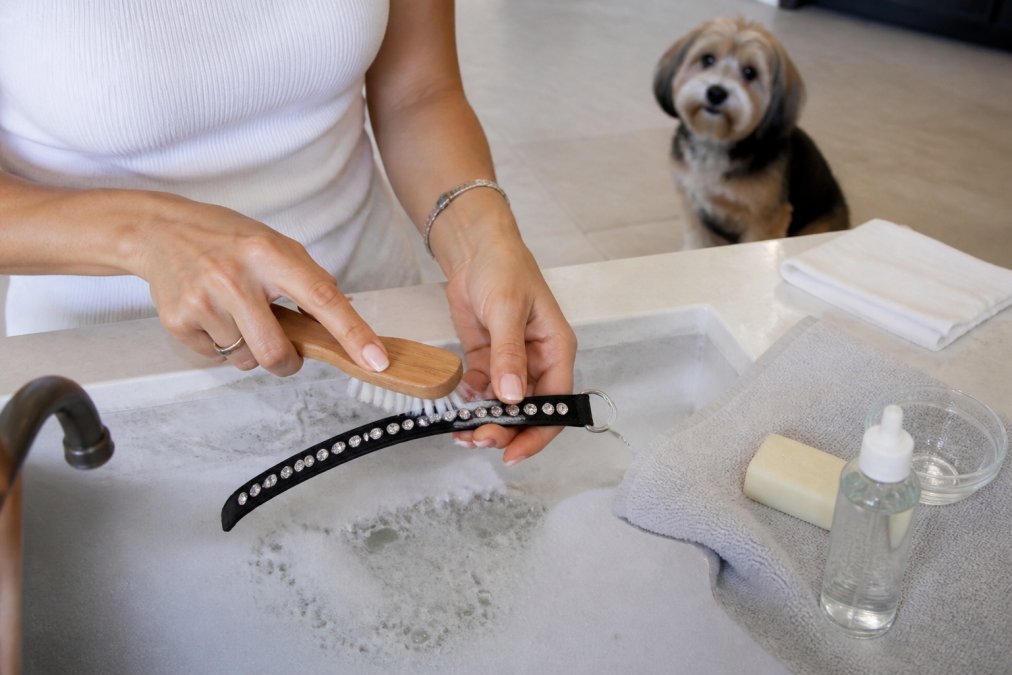
Step 1: Identify the Setting Type Before Anything Gets Wet
The setting type decides how much water the collar can safely take, so before you unclasp anything, look closely at how the stones are held in.
- Prong-set: Small metal claws grip each stone. These tolerate a brief rinse because the stone isn't glued in, but prongs can snag a brush, so scrub around them, not across them.
- Glued or adhesive-set: The stone sits in a cup or channel with adhesive underneath, the most common construction on affordable rhinestone collars, and the most water-sensitive. Adhesive softens with prolonged soaking, and once a stone lifts, the foil backing clouds and the stone goes dull even if you glue it back.
- Channel-set: Stones slide into a continuous metal rail. Durable, but grit trapped in the channel scratches the stone faces, so the rinse matters more than the scrub here.
If you can't tell which you have, treat it as glued, the conservative assumption that won't damage a prong-set collar.
Step 2: Inspect and Stabilize Loose Stones
Unclasp the collar and run a fingertip along the crystal row before it gets wet, pressing each stone lightly. A stone that rocks, spins, or clicks is already loose, and water will push it out.
If you find a loose stone, reseat it before washing. A tiny dot of clear craft glue applied with a toothpick and cured per the label holds most costume-jewelry stones. Genuine crystals in prong settings need jeweler's pliers, bending prongs yourself risks cracking the stone.
While inspecting, check the webbing at the buckle for fraying and the D-ring for cracks or heavy tarnish. Fraying webbing at the buckle means the collar is near the end of its life and washing won't save it.
Step 3: Pre-Treat the Webbing, Not the Stones
Mix a few drops of mild detergent into a bowl of warm water. Dip your soft-bristled brush and work it into the nylon webbing only, focusing on the areas against your dog's neck and under the chin, where oils and grime collect fastest.
Keep the brush off the crystal row. You're cleaning the fabric the stones are mounted on, and the less the settings are disturbed, the longer the adhesive and prongs last.
Step 4: Soak Briefly, and Time It
Let the collar soak five to ten minutes (How to Bathe Your Dog: Tips for Safely Giving Your Pet a Bath). Past roughly fifteen minutes, warm water can soften adhesive behind glued stones and dull the foil backing that gives each crystal its shine. Prong-set and channel-set collars have more margin, but there's no benefit to soaking longer.
Set a timer. It's easy to walk away and come back to a collar that's been in the bowl for half an hour.
Step 5: Scrub Gently, Then Rinse by Setting Type
Scrub the webbing in small circles with light pressure. On the crystal row, use short strokes and let the brush tips do the work, you're lifting surface grime, not grinding it in. Stain removers are unnecessary and usually too harsh for stones.
Rinse in a second bowl of clean warm water until no suds remain. How you rinse depends on the setting:
- Prong-set: A brief run under a gentle stream is fine. Angle the collar so water flows away from the settings, not into them.
- Glued or channel-set: Dunk and lift instead of running a stream directly over the stones. A direct stream can work under a lifted edge and pop a stone loose.
Step 6: Dry Hardware Immediately, Then Air Dry Flat
This step decides whether your hardware stays bright. As soon as the collar leaves the rinse, press the buckle, D-ring, and any metal sliders dry with a soft towel. Moisture left on plated or zinc-alloy hardware causes the chalky tarnish and pitting that ages a collar fast.
Then lay the collar flat on a clean towel to air dry, away from direct sunlight, radiators, hair dryers, and heaters. Heat cracks adhesive, warps webbing, and fades dyed leather.
Most collars dry within a few hours. Turn the collar once for airflow, and don't put it back on your dog until completely dry, damp webbing traps moisture against the skin and encourages bacteria.
Gentle Cleaning Solutions for Dog Collars (and What to Avoid)
The best solution for a crystal collar is a few drops of mild detergent in warm water, which lifts everyday grime without attacking settings or hardware finish.
A few options that work well:
- Mild dish soap: cuts oil and odor, rinses clean
- Pet-safe shampoo: gentle enough for sensitive skin, good for light cleaning
- Castile soap diluted in water: a solid choice for allergen-free cleaning solutions
- Damp cloth only: the right call for spot cleaning between full washes
What to avoid matters just as much. Bleach, ammonia, vinegar, and alcohol-based cleaners attack metal hardware and can cloud or loosen stones, while fabric softener leaves a residue that traps odor (cleaninginstitute.org).
How to Clean Leather Dog Collars Without Damaging the Finish
Leather needs a different approach than webbing. Water is leather's enemy: soaking strips the natural oils that keep it supple, and once they're gone, the strap cracks (Leather Conditioner and Cleaner Testing).
For routine cleaning, wipe the surface with a damp cloth and mild soap, then dry it immediately with a soft towel. Never submerge a leather collar or put one in a washing machine.
Conditioning is the step people skip. Apply a small amount of leather conditioner with a clean cloth, let it absorb, and buff off the excess every few months, more often if your dog swims or gets caught in the rain. It replaces the oils daily wear pulls out.
If your collar has both leather and crystals, treat it as a leather piece first. Spot clean the stones with a barely damp cloth and dry them right away.
How to Remove Smell From Dog Collar: Odor and Bacteria Buildup
Odor comes from bacteria and yeast living in the webbing, not surface dirt, which is why a quick rinse rarely fixes a smelly collar. You have to reach the fibers.
Start with a ten-minute warm soak in mild detergent, then scrub the webbing with your soft brush, paying attention to the area under your dog's chin and around the D-ring, which hold the most oil.
For stubborn odor, a pet-safe enzymatic cleaner breaks down the organic matter that bacteria feed on. Let it sit for the full time listed on the label, then rinse thoroughly. Never mask odor with perfume or fabric spray. It adds residue that traps more bacteria and can irritate your dog's skin.
Dry the collar completely before it goes back on. A collar that stays damp will smell again within days.
Protecting Crystals, Hardware, and Allergen-Free Options
Two things kill crystal collars faster than anything else: oxidation on the metal and adhesive failure behind the stones. Both are preventable.
Why Metal Hardware Oxidizes and How to Stop It
Buckles, D-rings, and sliders on decorative collars are usually plated zinc alloy or brass. When water sits on the surface, it reacts with the metal and plating, producing the dull, chalky film called tarnish. Left long enough, the plating pits and flakes, and polishing won't bring it back.
The fix is mechanical: dry the metal the moment the collar leaves the rinse water. Press, don't rub, a soft towel against the buckle, D-ring, and any rivets or sliders, since rubbing wet metal with a rough cloth scratches plating. Once fully air-dried, a ten-second buff with a dry microfiber cloth restores shine and removes water spots.
Skip metal polishes and abrasive creams on decorative hardware. They strip plating. If tarnish has already set in, a soft cloth and a tiny amount of mild dish soap is the most aggressive thing that's safe.
Why Crystal Foil Backing Clouds, and What Causes It
The sparkle in most rhinestones and many genuine crystals comes from a thin metallic foil layer behind the stone that reflects light back through it. Water reaching the foil, through a lifted edge, cracked prong setting, or prolonged soaking, oxidizes it, and the stone goes from brilliant to gray. You can't polish it back; the foil is sealed inside the setting.
This is why the soaking limit matters. Keep soaks under fifteen minutes, keep water warm rather than hot, and never scrub directly across the stone faces. Clean around the crystals, not into them.
A Simple Post-Wash Routine
Three habits keep a crystal collar looking new:
- Dry metal first. Towel-dry the buckle and D-ring before the collar goes on the drying rack.
- Buff after drying. A dry microfiber pass once the collar is fully dry removes water spots and restores hardware shine.
- Store flat or hanging, not crumpled. Stones pressed against each other in a drawer can scratch each other's faces. A hook or a flat shelf is better than a tangled pile.
Allergen-Free Cleaning for Sensitive Dogs
If your dog has allergies or sensitive skin, residue left in webbing after a wash commonly triggers itching around the neck, often mistaken for a food allergy or flea issue. Two adjustments solve most of it:
- Choose fragrance-free and dye-free cleaners. Perfumes and dyes are frequent contact irritants, and they serve no cleaning purpose.
- Rinse one extra time. After the water runs clear, do one more dunk in fresh warm water. It costs thirty seconds and removes the surfactant film that a single rinse leaves behind.
Castile soap diluted in warm water is a reasonable fragrance-free option, and plain unscented mild dish soap works too. Avoid "antibacterial" products for routine washing, the added actives are unnecessary and more likely to irritate skin.
A waterproof option sidesteps most of this. The Biothane Royal Blue crystal collar is built on waterproof BioThane webbing with a single row of Swarovski stones, so it resists mud, mess, and odor and wipes clean in seconds. It's the collar we reach for when a dog swims, hikes, or just gets filthy on the regular.

How Often to Clean and When to Replace
Wipe the collar down weekly and hand wash every four to six weeks. If your dog swims, rolls in something unpleasant, or has a skin condition, wash more often and dry thoroughly each time.
Replace the collar when you see any of these:
| Warning Sign | What It Means | Action |
|---|---|---|
| Multiple loose or missing stones | Adhesive or settings have failed | Replace |
| Fraying webbing at the buckle | Structural wear, weak point | Replace |
| Heavy tarnish or a stuck buckle | Hardware is compromised | Replace |
| Persistent odor after washing | Bacteria deep in the fibers | Replace |
| Cracks or stiffness in leather | Oils are gone, strap is failing | Condition or replace |
Catching these early protects your dog. A collar that fails at the buckle is a real safety risk, no matter how good it looks.
Frequently Asked Questions
Can I wash a crystal dog collar in the washing machine?
No. The agitation and heat of a machine cycle can loosen glue-set rhinestones and scratch the finish on buckles and D-rings. Even inside a mesh laundry bag, crystals rub against the drum and each other. Hand washing in warm water with a mild detergent takes about ten minutes and keeps every stone in place. If a collar is heavily soiled, soak it first, then scrub gently with a soft-bristled brush and air dry.
How do I remove odors from a luxury dog collar without harsh chemicals?
Start with a soak in warm water and a pet-safe or mild detergent, then work a soft-bristled brush along the nylon webbing to lift grime and bacteria buildup. Skip bleach and harsh cleaners, which can dull crystals and irritate your dog's skin. Air dry completely in a ventilated spot before putting the collar back on.
What should I avoid when cleaning high-end dog collars?
Avoid hot water, which can weaken adhesive under crystals, and never use abrasive scrubbers on metal hardware. Skip alcohol, acetone, and bleach-based cleaners because they dull Swarovski stones and strip leather conditioning. Do not submerge a leather collar in water, and keep it away from direct sunlight and radiators while drying. Also avoid soaking embellished collars for more than 20 minutes, since prolonged soaking time can loosen both glue and stitching.
How often should I clean my dog's crystal collar to prevent buildup?
Wipe the collar with a damp cloth weekly and do a full hand wash every four to six weeks. Dogs who swim, hike, or play in mud may need cleaning every two weeks. Regular maintenance prevents grime and bacteria buildup from settling around the crystal settings, where it is hardest to remove. Check hardware and stitching each time you clean, and replace the collar if you notice fraying, missing stones, or a buckle that no longer holds securely.
Crystal collars reward a little patience. Hand wash with mild detergent, keep the soak short, dry the hardware right away, and your collar will hold its shine for years instead of months. When you're ready for a piece built to handle real life, Aventura Pups offers waterproof BioThane designs set with genuine Swarovski crystals, handmade with the kind of craftsmanship that stands up to weekly wear. Browse the collection and find a collar that stays beautiful through every muddy adventure.
