



Table of Contents
- Handmade vs Mass-Produced Dog Apparel: The Core Differences
- Durable Materials for Dog Apparel: What to Look For
- How to Measure Your Dog for Clothes (and Why Fit Matters)
- The Benefits of Luxury Dog Clothing: Beyond Aesthetics
- Cost vs. Value: Is Handmade Dog Apparel Worth the Price?
- Maintenance and Repairability: Caring for Your Dog's Wardrobe
- Ethical Manufacturing and Supply Chain Transparency
- Conclusion
- Frequently Asked Questions
Last Updated: September 28, 2026
Handmade vs Mass-Produced Dog Apparel: The Core Differences
The difference between handmade vs mass-produced dog apparel comes down to how each piece is cut, sewn, and inspected. Handmade garments are built one at a time by a single maker who controls every seam; mass-produced pieces move down an assembly line where speed sets the pace.
Production Method and Garment Construction
Mass production favors speed. Pattern pieces are stacked, cut by machine, and sewn by operators who each handle one seam. That yields consistent sizing but leaves room for error when fabric shifts or a needle dulls mid-batch.
Quality Control and Batch Consistency
Batch consistency is where mass production wins on paper and loses in practice. A factory can turn out identical garments by the thousand, yet a loose thread on one unit often signals a pattern that repeats across the run.
Durable Materials for Dog Apparel: What to Look For
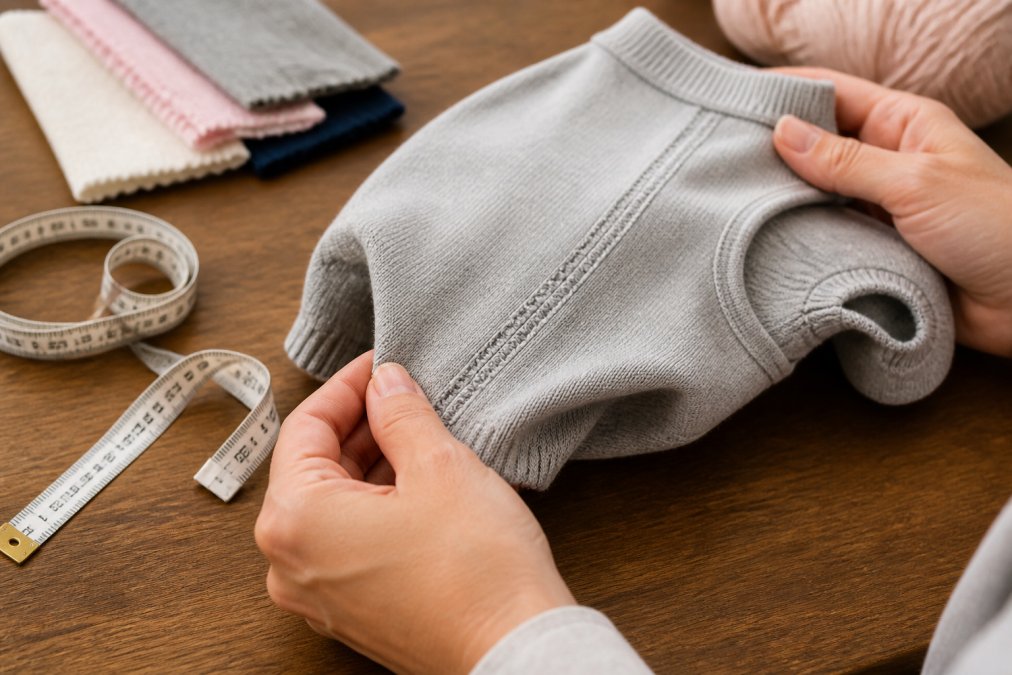
Durable materials for dog apparel start with fiber choice, not price. A well-made garment holds its shape after repeated wear and washing; a cheap one pills, stretches, or fades within weeks.
Fabric Types and Textile Integrity
Textile integrity describes how well a fabric resists stretching, pilling, and seam failure. Dense knits and tightly woven fabrics hold up better than loose, thin ones.
Safety and Toxicity Standards
Safety and toxicity standards are the gap most buyers never check. Dyes, finishes, and trims can carry residues that irritate skin or get chewed loose.
How to Measure Your Dog for Clothes (and Why Fit Matters)
Learning how to measure dog for clothes takes about five minutes and prevents most returns. You need three numbers: neck circumference, chest girth at the widest point, and back length from the base of the neck to the tail.
| Measurement | Where to Measure | Common Mistake |
|---|---|---|
| Neck | Base of neck, where a collar sits | Measuring too low on the shoulders |
| Chest girth | Widest point behind front legs | Pulling the tape too tight |
| Back length | Base of neck to base of tail | Measuring to the tail tip |
Ergonomics and Breed-Specific Anatomy
Ergonomic design accounts for how a dog actually moves. Deep-chested breeds like dachshunds need longer belly panels; short-legged breeds need higher-cut hems so fabric doesn't drag.
The Benefits of Luxury Dog Clothing: Beyond Aesthetics
The benefits of luxury dog clothing extend past appearance. Better materials, closer fits, and stronger construction show up in comfort and longevity, not just photos.
Comfort, Longevity, and Aesthetic Appeal
Comfort comes from fit and fabric weight. A garment that moves with the dog prevents chafing and lets your pup walk, sit, and lie down without restriction.
Cost vs. Value: Is Handmade Dog Apparel Worth the Price?
Handmade dog apparel costs more upfront because labor, materials, and small-batch production carry higher per-unit costs. Whether that premium pays off depends on how you calculate value, and most buyers calculate it wrong.
The Cost-Per-Wear Framework
Cost-per-wear is the only comparison that matters: divide the purchase price by the number of times your dog wears the garment before it fails. A cheap sweater that loses its shape after a handful of washes can cost more per wear than the handmade piece you hesitated to buy.
What Actually Drives the Handmade Premium
Four cost buckets separate handmade from mass-produced pricing:
- Labor per unit. A single maker cutting and sewing one garment at a time spends far more minutes per piece than an assembly-line operator handling one seam. That time is the largest line item.
- Material grade. Small makers typically buy narrower fabric runs at higher per-yard cost, and tend to choose denser knits and natural fibers that hold shape, which cost more than loose acrylics.
- Small-batch overhead. Pattern grading, sampling, and quality inspection are spread across dozens of units instead of thousands, so each unit absorbs more fixed cost.
- Repairability built in. Generous seam allowances and secure trim attachment cost more to construct but extend the garment's life, which is the whole point of the premium.
The Hidden Cost of Disposability
Mass-produced apparel is priced to be replaced, not repaired. Serged edges fray in ways that are hard to re-stitch, glued trims fail under chewing, and thin fabrics lose structure after a few washes. When a piece fails, the only option is to buy another, and that replacement cycle rarely shows up in the sticker price.
A Concrete Pricing Snapshot
Here's how pricing breaks down across a few pieces:
| Product | Price | Material | Best For |
|---|---|---|---|
| Reindeer Checker Sweater | $65.00 | 100% acrylic double knit | Chilly-weather walks |
| Angora Crown Black | $109.00 | 80% angora, 20% nylon | Small dogs, everyday luxury |
| A/P Pink Hearts Hat | $39.99 | Soft crocheted yarn | Photo shoots, occasions |
| Gwen the Giraffe Toy | $23.00 | Non-toxic yarn | Playtime, gifts |
The acrylic double knit sits at the lower end and the angora blend at the higher end; the gap reflects fiber cost and construction time, not marketing. If your dog wears a sweater daily through a cold season, the higher-priced piece usually wins on cost-per-wear.

When Mass-Produced Wins on Value
Handmade isn't automatically the better value. Mass-produced apparel wins when:
- The dog is still growing and will outgrow the piece within a season.
- The garment is for a one-time event, a costume, or a photo shoot.
- The dog is a heavy chewer who destroys clothing regardless of construction quality.
- You need a specific size immediately and can't wait for a made-to-order timeline.
Maintenance and Repairability: Caring for Your Dog's Wardrobe
Maintenance and repairability decide how long a garment stays in rotation. Most handmade pieces need cold water, mild detergent, and air drying, but the bigger story is what happens when something goes wrong, because that's where handmade and mass-produced apparel diverge most sharply.
Why Handmade Garments Are Repairable
Repairability comes down to construction choices made before the garment ever ships:
- Seam allowance. Handmade pieces typically leave extra fabric inside the seam, which gives a tailor or the original maker room to re-stitch a pulled seam without cutting into the body of the garment.
- Lockstitch vs. serged edges. A lockstitch can be unpicked and re-sewn. A serged edge, common in mass production, wraps and trims the fabric in one pass, so once it frays there's no clean edge left to work with.
- Trim attachment. Buttons, crystals, and appliqués sewn on by hand with doubled thread can be re-secured individually. Glue-set trims fail as a unit and usually can't be reattached without visible damage.
- Fabric stability. Dense knits and tightly woven fabrics hold their shape after a repair. Loose, thin fabrics tend to distort around the repair site.
The Repair-vs-Replace Decision
When a mass-produced garment fails, options are limited. A frayed serged hem, a detached glued crystal, or a stretched-out acrylic knit usually can't be repaired at a cost that makes sense, so the piece becomes disposable by design.
A Care Routine That Extends Life
A simple routine keeps most pieces wearable for years:
- Wash cold on a gentle cycle or by hand
- Use mild detergent, never bleach
- Lay flat to dry away from direct sun
- Check seams and trims after each wash
- Store folded, not hung, to prevent stretching
What to Inspect After Every Wash
A two-minute inspection after each wash catches problems while they're still cheap to fix:
- Seam integrity. Run a finger along each seam. Any gap or loose thread is a candidate for a quick re-stitch before it becomes a full seam failure.
- Trim security. Tug gently on every button, crystal, or appliqué. If it moves, re-secure it before your dog finds it.
- Fabric distortion. Check cuffs, hems, and the belly panel for stretching. Early re-blocking can restore shape; late intervention can't.
- Odor and residue. Lingering odor after a wash usually means detergent buildup, which attracts dirt and weakens fibers over time. A second rinse cycle solves it.
Storage Between Seasons
How you store a garment matters as much as how you wash it. Hanging a knit stretches the shoulders and distorts the fit; folding flat preserves the shape. Store clean, fully dry pieces in a breathable cotton bag rather than a sealed plastic bin that traps moisture and encourages mildew.
Handmade apparel isn't just more expensive to buy; it's cheaper to keep. The repair path that construction quality creates is the single biggest long-term cost advantage over mass-produced gear, and it's the reason a well-made piece can outlast three cheap replacements.
Ethical Manufacturing and Supply Chain Transparency
Ethical manufacturing and supply chain transparency let you trace where a garment came from and how it was made, traceability that's harder to get from large factories sourcing fabric from multiple suppliers.
Conclusion
Choosing between handmade and mass-produced dog apparel comes down to what you value most: upfront price or long-term quality. Handmade pieces cost more, but better materials, closer fits, and repairable construction usually justify the difference.
Frequently Asked Questions
Are handmade dog clothes more durable than mass-produced options?
Handmade dog clothes often use stronger construction methods, like reinforced seams and higher-quality threads, which can extend the garment's life. Mass-produced items may use lighter stitching and thinner fabrics to reduce costs, leading to faster wear. However, durability also depends on the specific materials and care. Look for tight, even stitching and durable fabrics like acrylic double knit or angora blends. Proper washing, such as hand washing cold and laying flat to dry, helps handmade pieces last even longer.
How does material quality differ between mass-produced and boutique dog clothes?
Mass-produced dog apparel often uses synthetic blends and lightweight fabrics to keep prices low, while boutique and handmade items typically use premium materials like upholstery-grade Ultrasuede, Japanese textiles, or soft acrylic double knits. These materials resist pilling, hold their shape, and feel more comfortable against a dog's skin. For example, hand-crocheted toys from Aventura Pups use soft, non-toxic yarn and sturdy stitching, which supports both safety and longevity. Checking the fabric content and care label helps you judge quality before buying.
Why is fit more accurate with handcrafted dog apparel?
Handcrafted dog apparel is often made in small batches or to order, allowing for adjustments that accommodate unique body shapes. Mass-produced sizes follow generic charts that may not suit dogs between sizes or with atypical proportions. Knowing how to measure dog for clothes, including neck, chest, and back length, ensures a better fit. Handmade garments can also be tailored for breed-specific anatomy, reducing slipping or rubbing. Always compare your dog's measurements to the brand's size guide and check the return policy if the fit isn't right.
Do luxury dog apparel brands prioritize sustainable materials?
Many luxury and handmade dog apparel brands focus on sustainable practices by using natural or durable materials, producing in small batches, and minimizing waste. This contrasts with fast fashion approaches that rely on high-volume production and synthetic fabrics. Sustainable fashion for pet accessories often includes ethical manufacturing, supply chain transparency, and materials like non-toxic yarn or acrylic double knit. While not every luxury brand is fully sustainable, the emphasis on craftsmanship and longevity naturally reduces environmental footprint compared to disposable, mass-produced items.
