



Table of Contents
- Quick Comparison: Stylish Dog Carriers for Airplane Travel
- What TSA Approved Pet Carrier Dimensions Mean for Cabin Travel
- The 4-in-1 Rolling Carrier: A Convertible Pick for Stress-Free Travel
- The Bella Bag: Handmade Comfort in Three Sizes
- Airline Pet Travel Policy Guide: What to Confirm Before You Fly
- How to Acclimate a Dog to a Travel Carrier Before Flight Day
- Conclusion
- Frequently Asked Questions
Last Updated: September 16, 2026
Quick Comparison: Stylish Dog Carriers for Airplane Travel
Flying with a small dog starts with a carrier that satisfies the airline and still looks like something you chose on purpose. This guide from Aventura Pups covers stylish dog carriers for airplane travel, from under-seat fit to post-flight care.
| Carrier | Price | Weight Capacity | Best For | Key Feature |
|---|---|---|---|---|
| 4-in-1 Rolling (7 finishes) | $379.99 | 15 lbs | Multi-leg trips, gear-heavy travelers | Converts: roller, backpack, car seat |
| Bella Bag (3 sizes) | $350.00 | Up to 15 lbs | Calm pets, long cabin stretches | 3 mesh windows, roll-up sides |
What TSA Approved Pet Carrier Dimensions Mean for Cabin Travel
"TSA approved pet carrier dimensions" is a phrase that gets misused constantly. The TSA screens pets at checkpoint but does not certify carriers; the airline sets the size rule, and the TSA's own guidance simply directs you to confirm with your carrier before flying, as noted in TSA guidance on traveling with pets.
How to Measure Your Dog for an Under-Seat Fit
Measure length from chest to rump, then add 2 to 3 inches of turning room. Height matters more than weight: a dog must stand and turn without its head pressing the ceiling. Compare your dog's weight against the carrier's limit, not its breed label.
The 4-in-1 Rolling Carrier: A Convertible Pick for Stress-Free Travel
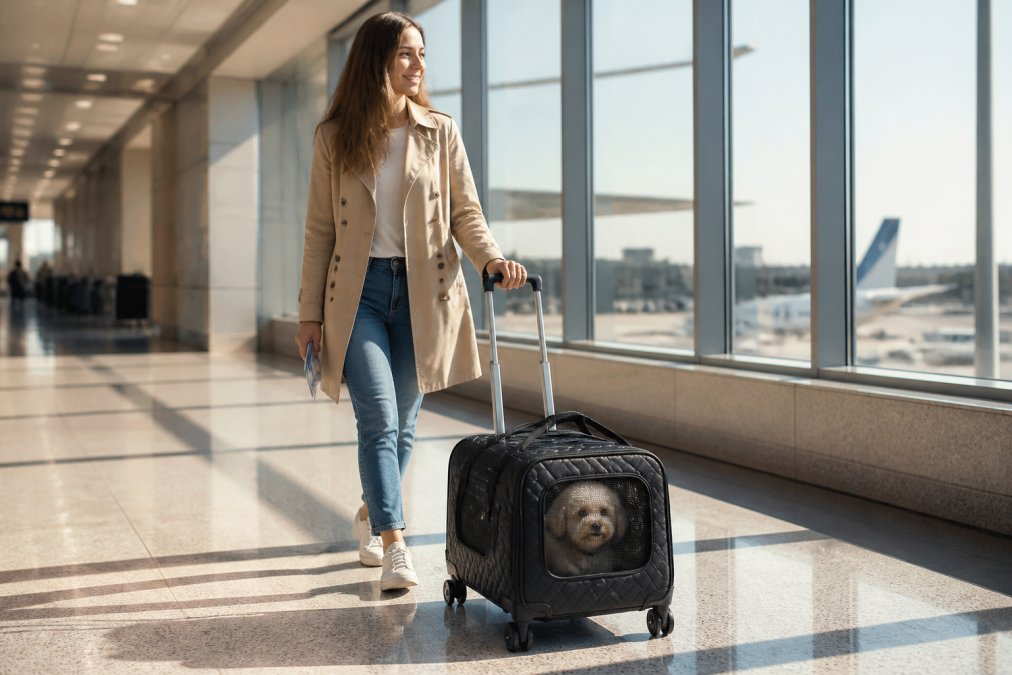
The 4-in-1 Rolling Carrier is the best pick for anyone juggling a suitcase and a dog. It functions as a roller bag, backpack, and car seat, with a retractable two-stop handle and detachable roller wheels and backpack straps, so you can switch modes between the curb and the jet bridge.
The Bella Bag: Handmade Comfort in Three Sizes
The Bella Bag is the better choice when your dog needs to settle quietly for a long flight. It is handmade in the USA and airline approved on most flights, with three mesh windows, roll-up side windows, an inside adjustable safety hook, two deep outside pockets, and a zippered side pocket. The removable faux fur bedding and waterproof nylon lining make cleanup straightforward.

Airline Pet Travel Policy Guide: What to Confirm Before You Fly
An airline pet travel policy guide is only useful if it names the variables that actually change your trip. Rules are set per airline and per aircraft, not per country, so the same carrier can accept your dog on a widebody and refuse it on a regional jet. Confirm four things before you pack: the in-cabin weight limit (carrier plus pet), the under-seat dimensions for your aircraft type, the advance-notice window for adding a pet to your reservation, and the health documentation your airline requires.
Where the Rules Actually Live
Every major domestic airline publishes a pet page with a hard number, and the numbers differ. A common pattern is a combined pet-plus-carrier limit around 20 lb on mainline jets, with a lower ceiling on regional aircraft operated under a partner brand. Two traps catch most owners:
- The weight limit includes the carrier. A 15 lb dog in a 4 lb bag can clear a 20 lb limit; the same dog in a 6 lb rolling carrier cannot.
- The seat map matters more than the airline. Bulkhead and exit rows are usually off-limits, and aisle seats on some narrowbodies have a narrower underseat footprint than window seats because of the seat-track hardware.
Domestic vs. International: The Rules Diverge Fast
Domestic cabin travel is largely a size-and-count question. International travel adds layers domestic guides skip:
- Brachycephalic restrictions. Several destination countries restrict or ban snub-nosed breeds from cabin entry, and some ban them from cargo outright. Pugs, French Bulldogs, Boston Terriers, and similar breeds need a destination-specific check, not a general one.
- Import permits and health certificates. Many countries require an import permit issued before travel and a health certificate signed within a narrow window, often measured in days, not weeks, of arrival. A certificate dated too early is worthless.
- Rabies titer timing. Some destinations require a rabies antibody titer drawn a set number of months before entry, which can push a trip out by half a year if you start late.
- In-cabin vs. cargo rules. A country may allow a dog in the cabin on the outbound leg and require cargo on the return, or vice versa, depending on the airline's route authority.
The Under-Seat Clearance Test Competitors Skip
Manufacturer specs tell you the bag's exterior dimensions, not whether it fits the seat you were assigned. That gap is where most gate rejections happen.
A practical test you can run before you fly:
- Measure the underseat opening, not the seat. On most narrowbody economy seats the usable opening is narrower than the seat width because the seat legs and life-vest housing intrude. Measure the clear space between the seat legs at floor level.
- Test the bag compressed, not expanded. A soft-sided carrier only earns its advantage when you push the sides in. Load the bag with a comparable weight, then compress it to the height you would need at the gate.
- Check the aisle-side clearance. On regional jets, the underseat space under the aisle seat is often the tightest. If your dog rides in a window seat, you usually get more depth.
- Confirm the bag's collapsed height. A carrier that stands 12" tall uncompressed may compress to 9" or 10" with the bedding removed, a meaningful difference on a regional aircraft.
Book the pet space when you book your ticket. In-cabin pet slots are limited per flight and often sell out before the seats do, and the slot is tied to a specific aircraft, so a schedule change can invalidate your approval.
What to Have at the Counter
Bring a printed copy of the airline's pet policy page with the date visible, your reservation confirmation showing the pet fee was paid, the health certificate if required, and a soft tape measure. If a gate agent questions the fit, the tape measure and printed policy settle the conversation faster than a call to customer service.
A carrier that is "airline approved" is approved for the airline that tested it, not for every airline. Approval is a marketing claim, not a regulatory status. The only approval that matters at the gate is the gate agent's.
How to Acclimate a Dog to a Travel Carrier Before Flight Day
Acclimating a dog to a travel carrier takes one to two weeks of short, positive sessions, not a single night-before introduction. Leave the carrier open in a room your dog already relaxes in, with the faux fur bedding inside and a treat or two tossed in, and let your dog enter on its own.
Breed-Specific Adjustments Most Guides Ignore
Generic acclimation advice assumes a dog that breathes, stands, and turns like a Labrador. Two breed profiles need a different approach:
- Brachycephalic breeds (Pugs, French Bulldogs, Boston Terriers, Shih Tzus). These dogs move less air per breath, so a carrier with three mesh windows and roll-up side panels gives them more cross-ventilation than a single-mesh bag. Acclimate them to the carrier with the side panels rolled up first, then practice with them down so the dog learns the airflow changes. Keep sessions short, five to ten minutes, and never leave a flat-faced dog closed in a carrier in a warm car during practice.
- Long-bodied breeds (Dachshunds, Corgis, Basset Hounds). Length, not weight, is the binding constraint. A dog that fits the weight limit can still be too long to lie down flat, which is the posture that keeps them calm on a long flight. Measure chest-to-rump and add turning room before you trust a size chart.
The Post-Flight Routine Nobody Writes About
A carrier that just spent six hours under a seat has picked up dander, drool, spilled water, and whatever was on the airport floor. A short routine after every flight keeps the bag usable and the dog healthy:
- Empty and shake out the carrier outside or over a trash can before you bring it inside. Bedding comes out first.
- Wipe down the interior with a pet-safe enzymatic cleaner. Enzymatic cleaners break down the proteins in drool and urine that a general-purpose spray leaves behind, which is why the smell returns a day later if you skip this step.
- Clean the mesh separately. Mesh panels trap hair in the weave. A soft brush or a lint roller works better than a wet cloth, which pushes hair deeper into the mesh.
- Dry fully before storage. A waterproof nylon lining that stays damp between trips is where mildew starts. Leave the carrier open and unzipped overnight.
- Check the hardware. Zippers, the interior safety leash, and the shoulder-strap clips take the most abuse. Test the zipper pull through its full travel and confirm the leash clip still locks.
Storage Between Trips
Store the carrier open, not folded flat. A soft-sided carrier that lives compressed in a closet loses its structure, and a bag that has lost its structure no longer compresses predictably under a seat. Store the 4-in-1 Rolling Carrier in roller mode with the wheels attached so the frame keeps its shape, and keep the backpack straps inside the front compartment.
Conclusion
The real challenge with flying a small dog is not finding a carrier that looks good, it is finding one that fits the seat, the weight limit, and your dog's actual measurements. Aventura Pups builds carriers for exactly that balance: the 4-in-1 Rolling Carrier converts from roller to backpack to car seat at $379.99, and the handmade Bella Bag offers three sizes with roll-up windows and removable faux fur bedding at $350.00.
Frequently Asked Questions
What is the best dog carrier for flying?
The best carrier depends on your dog's size and your travel style. Soft-sided carriers with mesh ventilation and a safety tether are the standard for in-cabin travel. The Bella Bag comes in three sizes, from teacup dogs under 4 lbs up to one dog up to 15 lbs, and is airline approved for travel on most flights. The 4-in-1 rolling carrier holds up to 15 lbs and doubles as a backpack and car seat.
What are the FAA requirements for in-cabin dog carriers?
The FAA does not certify individual carriers, but it requires pets to stay in a carrier that fits under the seat in front of you for the entire flight. Each airline sets its own size limits, typically around 17 to 19 inches long, 10 to 11 inches wide, and 9 to 11 inches tall. Always check your specific airline's policy before booking, since dimensions vary by aircraft.
Can a 25 lb dog fit under an airplane seat?
No. Most in-cabin carriers are capped at 15 to 20 lbs, and the under-seat space itself is the real limit. A 25 lb dog generally exceeds both the weight limit and the available floor space. The Bella Bag Large fits one dog up to 15 lbs, and the 4-in-1 rolling carrier has a 15 lb weight capacity. For a 25 lb dog, you would need to book cargo or check with your airline about alternative options.
How do I measure my dog to ensure they fit in an under-seat carrier?
Measure your dog from the base of the tail to the front of the chest for length, from the floor to the top of the head for height, and across the widest part of the body for width. Add 2 to 3 inches to each measurement so your dog can stand, turn around, and lie down. Compare those numbers to the carrier's interior dimensions, not the exterior. The Bella Bag Small measures 17 by 7 by 9 inches and fits dogs 8 to 10 lbs.
Are soft-sided carriers better for airplane travel than hard-sided ones?
Soft-sided carriers are generally better for in-cabin travel because they compress slightly to fit under seats and conform to tight spaces. They also tend to be lighter and easier to carry through terminals. Hard-sided carriers offer more structural protection but often exceed under-seat dimensions. For cabin travel, a soft-sided carrier with mesh ventilation and a safety tether is the practical choice.
