



Table of Contents
- Why Getting the Right Harness Size Matters
- Tools You'll Need for Accurate Measurements
- How to Measure Your Dog for a Harness
- Understanding Dog Harness Sizing Charts
- Best Dog Harness Options for Small Breeds
- What to Do If Your Dog Is Between Sizes
- The Two-Finger Rule and Fit Verification
- Troubleshooting Common Harness Fit Issues
- Frequently Asked Questions
Last Updated: September 20, 2026
Why Getting the Right Harness Size Matters
A poorly fitting harness causes discomfort, chafing, injury, and escape risks, plus frustration for both of you.
Getting the right dog harness size ensures comfort, safety, and control while preventing escape and allowing full range of motion.
A few minutes of accurate measuring saves weeks of hassle.
Measuring your dog takes just 15 minutes with basic tools and ensures you choose the perfect harness every time.
Tools You'll Need for Accurate Measurements
What to gather:
- Soft measuring tape (the flexible kind used for sewing)
- Pen and paper to write down numbers
- Your dog's weight (use a bathroom scale if needed)
A soft measuring tape is essential; hard rulers won't curve around your dog's body. A piece of string works as backup if needed.
Write measurements down immediately for future harness shopping.
How to Measure Your Dog for a Harness
Accurate measurements depend on proper positioning and technique. Your dog should stand naturally, not stretched out or hunched.
Measuring Girth and Chest Circumference
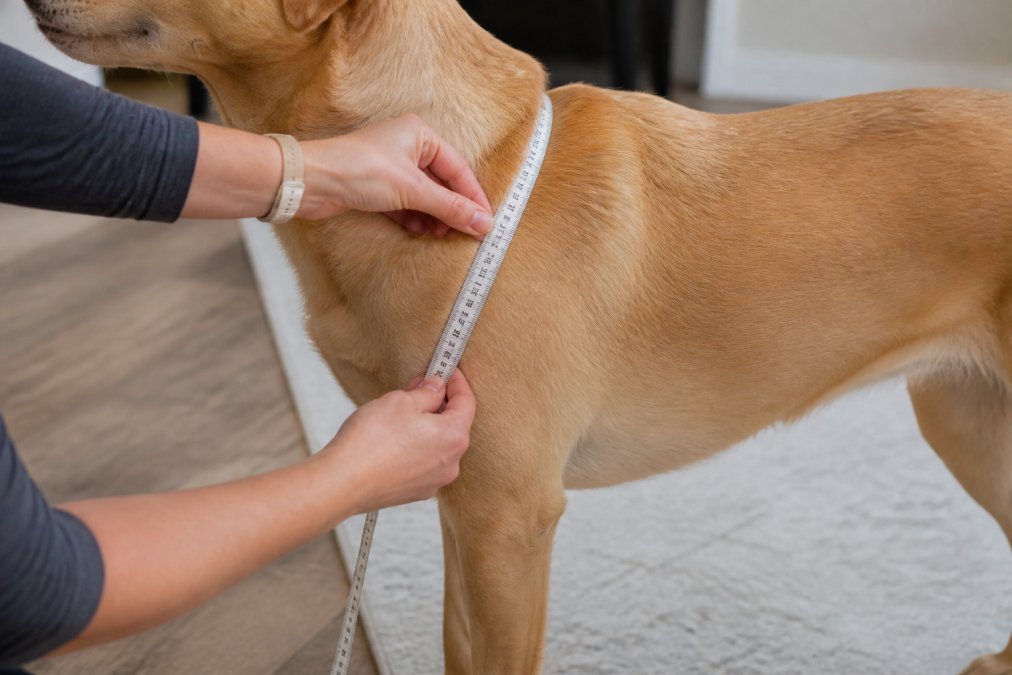
Girth, the distance around your dog's chest at the widest point, is the most important measurement for harness sizing.
Place your dog on a flat surface and have someone hold them still or use treats for calm. Run the measuring tape around the fullest part of the chest, just behind the front legs where the harness will sit.
The tape should be snug but not tight, you should fit one finger underneath. Take the measurement where the tape naturally falls without pulling.
Measuring Neck Base and Shoulder Blades
The neck base measurement ensures the harness doesn't slip over your dog's head. Measure around the neck where it meets the shoulders, not at the throat.
Place the tape at the base of the neck where it connects to the body (lower than a collar). Keep the tape loose for comfort and breathing.
The shoulder blade measurement ensures the harness won't ride up or slip backward. Measure across the widest point of the shoulders, from blade to blade.
Understanding Dog Harness Sizing Charts
Harness sizing charts use girth measurements and weight ranges, but weight alone is unreliable because two dogs of the same weight can have vastly different body proportions.
Common size ranges (industry standard):
- Teacup: 8-15 inches girth, 2-5 lbs
- XSmall: 12-16 inches girth, 5-10 lbs
- Small: 14-18 inches girth, 10-15 lbs
- Medium: 16-22 inches girth, 15-20 lbs
- Large: 18-26 inches girth, 20-25 lbs
These ranges vary significantly by brand and harness style. Always check the specific chart for the harness you're considering, as different manufacturers use different sizing standards.
Why Body Shape Matters More Than Weight
Girth measurement is far more reliable than weight for predicting fit. A Labrador Retriever and a Corgi might both weigh 40 pounds but have dramatically different chest circumferences.
Deep-chested breeds (Greyhounds, Whippets, German Shepherds, Weimaraners) often need a size up from what their weight suggests to accommodate the deep ribcage without sliding backward or riding up the neck.
Barrel-chested breeds (Bulldogs, Pugs, Boston Terriers, Dachshunds) often need a smaller neck-base measurement than their girth suggests, as a harness sized only by girth may slip over the head.
Narrow-waisted breeds (Whippets, Italian Greyhounds, some Terriers) have a pronounced difference between chest girth and waist circumference. Look for harnesses with multiple adjustment points or size down with careful strap adjustment.
Reading the Chart: Girth vs. Weight
When a sizing chart shows a range like "Medium: 16-22 inches girth, 15-20 lbs," prioritize the girth number, it determines fit, not weight.
What to Do When Measurements Don't Match the Chart
If your dog's measurements fall between two sizes, follow this hierarchy: (1) Prioritize girth measurement; (2) Consider your dog's breed type; (3) Check for adjustability, a larger harness can be tightened, but a smaller one cannot be loosened enough; (4) Consult the brand's customer service. A five-minute conversation can prevent a return.
Best Dog Harness Options for Small Breeds
Small breeds need harnesses that balance security with comfort, but the right choice depends on harness style as much as size. Different harness types fit differently on the body, which means sizing can vary by style even within the same brand.
Harness Style and How It Affects Sizing
Step-in harnesses are put on by having your dog step into leg holes, then fastening at the back or sides. These typically fit snugly because they don't go over the head. Small breeds often fit true to size in step-in harnesses. The main sizing consideration is ensuring the leg holes are proportionate to your dog's limb length, a dog with short legs may need a smaller size even if girth is in the medium range.
Overhead (slip-on) harnesses go over the dog's head like a sweater. These require a larger neck opening, which means they may need to be sized up to fit comfortably over the head without choking. A dog that measures Small in girth might need a Medium in an overhead harness. Always verify that the neck opening is large enough before ordering.
Front-clip harnesses have a leash attachment point on the chest rather than the back. This style distributes pulling force differently and can feel tighter across the chest. Small breeds may need to size up slightly in front-clip harnesses to avoid pressure on the sternum. Check the two-finger rule carefully in the chest area.
Back-clip harnesses attach the leash at the shoulders. These are generally roomier and allow more natural movement. Small breeds typically fit true to size in back-clip harnesses, though very small dogs (under 10 pounds) should verify that the back attachment point doesn't sit too high on the spine.
Material and Fit Considerations
The material of the harness also affects how it fits. Rigid materials like nylon webbing hold their shape and fit predictably. Soft materials like fleece-lined or padded harnesses compress slightly, which can make them feel looser after a few wears. If you're choosing a padded harness for a small breed, you may want to size down slightly to account for compression, or plan to tighten straps after the first few uses.
Reflective stitching and safety features don't affect sizing, but they do affect visibility during evening walks, an important consideration for small breeds that are harder to see in low light.
Adjustability as a Sizing Safety Net
The best harnesses for small breeds offer multiple adjustment points. Sliding toggles, buckles, or velcro straps let you fine-tune the fit even if the base size isn't perfect. For small breeds especially, adjustability is critical because the difference between sizes can be only 2-3 inches of girth, and a harness with good adjustment can bridge that gap.
When comparing harness options, prioritize models with multiple adjustment points. This allows you to customize the fit to your dog's unique proportions.
Testing Fit Before Committing to Regular Use
After purchasing a harness, test the fit during short indoor walks before longer outings. Small breeds may take a day or two to adjust to a new harness. Watch for any signs of discomfort, resistance to wearing it, excessive scratching, or reluctance to move, and make adjustments as needed. Check the skin after removing the harness; red marks that fade quickly are normal, but persistent marks indicate the harness needs adjustment or sizing up.
What to Do If Your Dog Is Between Sizes
Many dogs fall between standard sizing. The solution depends on your dog's body shape and the harness type.
If your girth measurement is between two sizes, choose based on the larger measurement. A slightly loose harness can be tightened with adjustable straps. A too-tight harness causes discomfort and potential injury.
Check if the harness has adjustable straps. Most quality harnesses offer multiple adjustment points. These let you fine-tune the fit even if the base size isn't perfect.
Consider your dog's body shape. Tapered breeds need different sizing than stocky dogs. A dog with a deep chest but narrow waist might need a medium for girth but small for neck base.
Contact customer service if you're unsure. Contact customer service if you're unsure.
The Two-Finger Rule and Fit Verification
The two-finger rule is the standard for checking harness fit. This simple test prevents both too-tight and too-loose situations.
After putting on the harness, slide two fingers under each strap. You should fit them comfortably without forcing.
Troubleshooting Common Harness Fit Issues
Even with proper measurement, fit problems sometimes occur. Most issues have straightforward solutions.
Frequently Asked Questions
What is the two-finger rule for dog harnesses?
The two-finger rule is a simple fit check: after fastening the harness, you should be able to slide two fingers comfortably between the harness and your dog's body. This ensures the fit is snug enough for security but loose enough to allow proper range of motion and prevent chafing. If you can't fit two fingers, the harness is too tight. If more than two fingers fit easily, it's too loose.
Should I measure my dog's neck or chest for harness sizing?
Both measurements matter, but for most harness styles, chest circumference and girth are more critical than neck measurement alone. Measure around the widest part of your dog's chest, behind the front legs, and around the ribcage at the sternum. Neck base measurement is important for harnesses with neck straps, but chest girth determines the overall size category. Always check the specific sizing chart for your harness style.
How do I know if my dog's harness is too tight or too loose?
A harness that's too tight restricts movement, causes chafing, and creates visible indentations in the fur. Your dog may seem uncomfortable or resist wearing it. A harness that's too loose allows escape, fails to distribute weight properly, and shifts during walks. Use the two-finger rule to verify fit, and watch for signs of discomfort like rubbing, reluctance to move, or skin irritation. Adjustable straps should be snug but allow comfortable range of motion.
What if my dog is between harness sizes?
If your dog falls between sizes, choose the larger size and use adjustable straps to create a snug fit. Many quality harnesses feature sliding toggles or adjustable buckles that allow customization for dogs with tapered body shapes or unusual proportions. Ensure all straps are tightened securely and verify the fit with the two-finger rule. If adjustment isn't enough, consider trying the smaller size or exploring harnesses designed for your dog's specific body type.
