



Table of Contents
- The Real Cost of Handmade Dog Collars
- Materials and Construction Quality Set Handmade Apart
- Labor, Time Investment, and Craftsmanship
- Handmade vs. Mass-Produced Dog Collars: A Direct Comparison
- Are Custom Dog Collars Worth the Investment?
- How to Choose a Dog Collar That Delivers Real Value
- Assessing Quality and Safety in Handmade Collars
- Care, Repair, and Lifetime Value
- Frequently Asked Questions
Last Updated: October 9, 2026
The Real Cost of Handmade Dog Collars
Why handmade dog collars cost more comes down to one fundamental difference: you're paying for craftsmanship, premium materials, and time. You're investing in something made with intention and quality that mass-produced alternatives can't match.

At Aventura Pups, we understand why this question matters. The price difference between a $19 personalized collar and a $59.99 Swarovski crystal collar can feel steep, but once you understand what goes into handmade collars, the investment makes sense.
Handmade collars require real labor, premium materials, and meticulous attention to detail. Each is constructed individually, not stamped out in bulk, costing more upfront but delivering durability, safety, and beauty cheaper alternatives won't provide.
Materials and Construction Quality Set Handmade Apart
Handmade collars typically use upholstery-grade fabrics like Ultrasuede and real hardware like stainless steel D-rings and buckles. Mass-produced collars cut corners with synthetic materials, cheap plastic hardware, and thin fabric that tears easily.
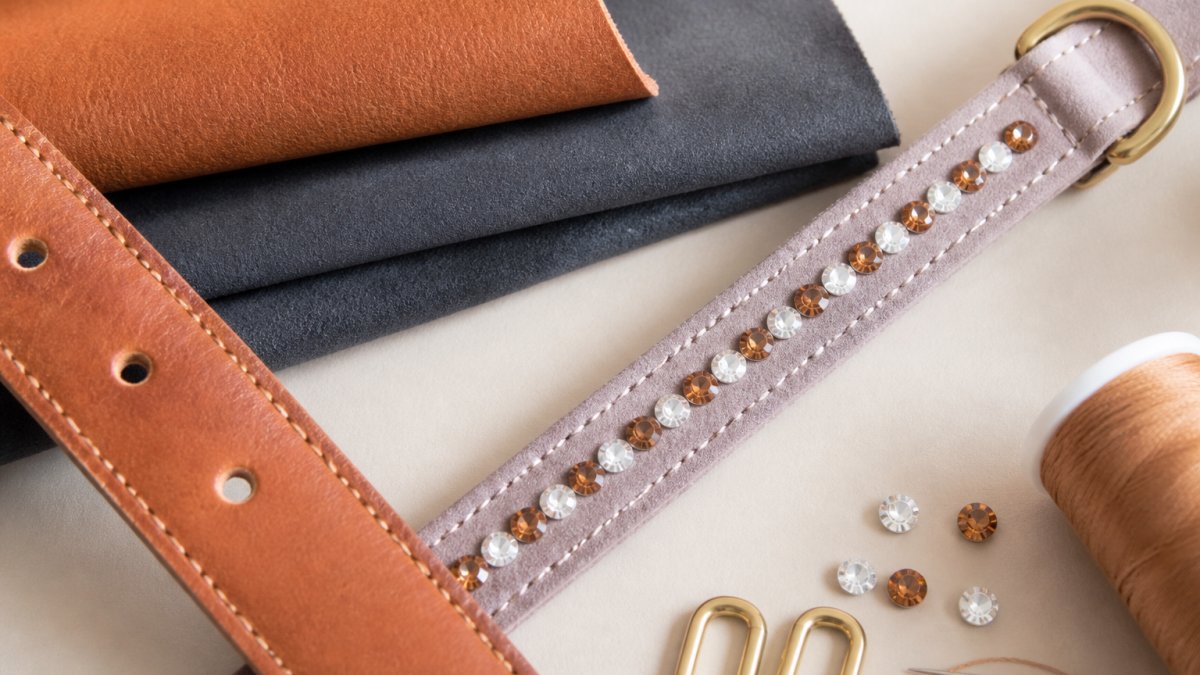
Every component is higher quality: reinforced stitching, heavy-duty hardware, and fabric that resists fading and wear. These details cost more because they're built to last years, not months.
A mass-produced collar might use a single row of stitching; a handmade collar uses multiple rows, heavy-duty polyester or nylon thread built for constant tension, and sealed seams to prevent fraying.
Stainless steel D-rings don't rust; plastic buckles break. Real metal hardware adds cost but ensures your collar won't fail when your dog pulls or plays, essential for safely attaching a leash, especially on small dogs.
Labor, Time Investment, and Craftsmanship
1. Design and prototyping. Before a single collar is sold, a maker develops patterns, tests hardware placement, and sews samples.
2. Material sourcing. Ultrasuede, stainless steel D-rings, and solid brass or metal buckles cost more per unit than synthetic webbing and plastic hardware.
**3.
4. Stitching. The slowest step. Multiple rows at the D-ring and buckle take far longer than a single assembly-line pass, especially on a heavy-duty walking-foot machine.
5. Customization. Personalization adds a separate workflow: confirming the dog's exact neck measurement, laying out a name or initials, and stitching or embroidering it.
6. Quality control and packaging. Each collar is inspected for stitch tension, hardware security, and edge finish, then packaged individually rather than bulk-shipped.
7. Overhead and selling fees. The part buyers rarely see: sewing machine, thread, needles, workspace, insurance, website hosting, payment processing, and marketplace fees.
8. The maker's wage. After materials, fees, and overhead, what's left pays the person who did the work.
Two handmade collars at the same price can represent very different value. A maker who sources cheaper hardware or skips reinforced stitching can hit a lower price, but the collar won't hold up. The construction details, not the price tag, tell you which one you're getting.
U.S. Small Business Administration guidance on pricing a product to cover costs and labor
Handmade vs. Mass-Produced Dog Collars: A Direct Comparison
The differences between handmade and mass-produced dog collars are stark when you look at them side by side.

| Factor | Handmade Collar | Mass-Produced Collar |
|---|---|---|
| Material Quality | Ultrasuede, real hardware | Synthetic fabrics, plastic buckles |
| Stitching | Multiple rows | Single row, prone to fraying |
| Customization | Full personalization available | Limited or no customization |
| Production Time | 2-4 hours per collar | Minutes per collar |
| Durability | Years of wear with proper care | 6-12 months typical |
| D-Ring Quality | Real metal, won't rust | Plastic or cheap metal |
| Price Range | $40-100+ | $10-25 |
| Safety Features | Tested for small dog comfort | Minimal safety testing |
Mass-produced collars are made in bulk on automated machines: fabric cut in large batches, pieces assembled on a production line, hardware attached by machine. The process is optimized for speed and cost, not quality.
Handmade collars follow a different model: each is made individually, with the maker controlling every step. It costs more in labor but allows quality control assembly lines can't match.
A handmade collar costs more because it's made by a person, not a machine, someone responsible for the final product who cares whether it lasts and whether your dog is comfortable.
Are Custom Dog Collars Worth the Investment?
The honest answer is: sometimes. A handmade collar is worth the premium when the features you're paying for actually match how you and your dog use a collar. It's not worth it when a basic collar already does the job. Here's how to tell the difference.
Compare like for like, not price alone. The fair comparison isn't "$60 handmade vs. $15 mass-produced" but two collars with the same materials, hardware, and construction. Find a mass-produced collar with stainless steel hardware, and multi-row stitching and the gap narrows considerably.
Do the cost-per-year math. The useful number is cost divided by expected years of use, not the sticker price.
- A $15 collar that lasts about six months costs roughly $30 per year.
- A $60 collar that lasts five years costs roughly $12 per year.
- A $60 collar that lasts only one year costs $60 per year, worse than the cheap option.
That last line matters. A handmade collar only wins on lifetime value if it actually lasts. That's why construction quality, not the "handmade" label, is what justifies the price.
When the premium is worth it:
- Your dog wears a collar daily and you want one that won't fray, fade, or fail.
- Your dog pulls or plays rough, and you need hardware that won't snap.
- You need a precise fit, small dogs in particular can slip out of one-size-fits-most collars, which is a safety issue, not just a comfort one.
- You want identification on the collar itself, which adds a practical safety benefit beyond style.
- You value repairability: a maker can often re-stitch a seam or replace a buckle, while a mass-produced collar typically gets thrown away.
When a basic collar is the smarter buy:
- A puppy or fast-growing dog that will outgrow the collar within months.
- A backup or travel collar you rarely use.
- A dog that only wears a collar occasionally, such as for vet visits.
- You're still deciding on a style and don't want to commit to a custom order yet.
A note on safety and sizing. Fit should allow about two fingers of slack between collar and neck, snug enough not to slip over the head, loose enough to avoid discomfort. Too loose is an escape risk; too tight causes irritation. Custom sizing is one of the clearest reasons a handmade collar can be worth more, removing the guesswork of generic sizing.
The bottom line: buy handmade when the durability, fit, safety, and repairability genuinely match your dog's daily life. Buy basic when the collar is temporary, occasional, or a placeholder. The premium is justified by use, not by principle.
How to Choose a Dog Collar That Delivers Real Value
Choosing between handmade and mass-produced comes down to what matters for your dog and situation. Start with these questions:
- How often does your dog wear a collar?
- Is your dog small, medium, or large?
- Does your dog pull hard on the leash?
- How active or rough is your dog with gear?
- Do you need a custom fit or personalization?
- What's your budget for a collar that lasts?
If your dog wears a collar daily and you want it to last years, prioritize quality: handmade options with genuine materials and reinforced construction. Aventura Pups offers personalized dog collars starting at $19, plus Swarovski crystal collars at $59.99, both outlasting mass-produced alternatives.
For small dogs especially, fit matters enormously, a poorly fitting collar causes discomfort and safety risks. Handmade collars can be customized to your dog's exact neck measurement, which one-size-fits-most collars can't achieve.
Ultrasuede feels better, looks better, and lasts longer than synthetic fabrics, and real metal hardware won't rust or break. These materials cost more but directly impact how long your collar lasts.
If you want your dog's name on the collar, handmade is your only real option, adding safety and style without much cost, which mass-produced collars can't match.
Assessing Quality and Safety in Handmade Collars
Not all handmade collars are created equal, quality varies with the maker's skill, materials, and construction methods. Here's how to assess whether one is worth the price.
Check the stitching first. Quality handmade collars have multiple rows, especially where the D-ring attaches, with even, tight stitches. Loose or uneven stitching is a red flag; seams should feel smooth and secure, not rough or loose.
Examine the hardware. Real metal D-rings and buckles won't rust; cheap metal will. Flimsy or dull hardware is likely low-quality, good hardware is substantial, shiny, and solid in your hand.
Look at the edges. Handmade collars should have finished edges that don't fray. Raw edges that might unravel signal poor construction.
Ask about materials. A maker should tell you exactly what fabric, leather, and hardware they use; vagueness is concerning. Transparency about materials is a sign of quality.
Check for reinforcement at weak points: extra fabric where the D-ring attaches, multiple stitching where the buckle connects. These details prevent failure under stress.
For small dogs, verify proper fit: too loose is a safety hazard, too tight causes discomfort.
Care, Repair, and Lifetime Value
One major advantage of handmade dog collars is repairability. If a seam splits or a buckle breaks, a skilled maker can fix it.
Proper care extends the life of a handmade collar significantly. Here's what to do:
- Clean regularly with mild soap and water
- Air dry completely before storing
- Avoid prolonged exposure to direct sunlight, which fades fabric
- Check stitching and hardware periodically
- Store in a cool, dry place away from moisture
Leather collars benefit from occasional conditioning. A light leather cream keeps the material supple and prevents cracking. Ultrasuede and other fabrics just need gentle cleaning.
Most handmade collars last 3-5 years with normal use and proper care. A $59.99 handmade collar lasting five years costs about $12 per year; a $15 mass-produced collar lasting six months costs $30 per year.
If something breaks, reach out to the maker, many repair collars for a small fee or replace them under warranty, support that's rare with mass-produced alternatives.
The lifetime value of a handmade collar goes beyond durability: you own something made by a real person, with care visible in every detail, which matters to owners who want the best for their pets.
Choosing a dog collar isn't just about finding something that fits. It's about finding something that will last, keep your dog safe, and reflect the care you put into their wellbeing.
Frequently Asked Questions
Why are handmade dog collars more expensive than mass-produced ones?
Handmade dog collars cost more due to several factors: premium materials like genuine leather and imported Ultrasuede, individual craftsmanship and labor hours, quality control standards, and smaller production runs. Mass-produced collars use cheaper synthetic materials and automated manufacturing, which reduces per-unit costs. The price difference reflects the time makers invest in each collar and the durability of materials chosen.
Are custom dog collars worth the extra cost?
Custom dog collars offer real advantages if durability and fit matter to you. They're tailored to your dog's exact measurements, reducing fit issues and escape risks. Premium materials like Ultrasuede and quality hardware last significantly longer than budget alternatives, often providing 3-5 years of wear versus 6-12 months for cheaper options. If your dog frequently travels or you prioritize aesthetic and comfort, the investment typically pays off.
What materials make a dog collar more durable?
Genuine leather, upholstery-grade fabrics like Ultrasuede, and stainless steel hardware create collars that withstand regular wear. These materials resist fading, maintain structural integrity through repeated washing, and don't degrade quickly like synthetic alternatives. Quality stitching with reinforced seams also matters, handmade collars often feature multiple stitch rows that prevent seam separation, a common failure point in mass-produced collars.
How can you tell if a handmade dog collar is well made?
Inspect the stitching for consistency and multiple reinforced rows, check that hardware is stainless steel or high-quality metal (not cheap plating), verify materials match the product description, and look for even dyeing and finishing. Ask makers about their process and materials sourcing. Well-made collars have smooth edges, secure D-rings and buckles, and no loose threads. Request photos of construction details before purchasing, and choose makers who stand behind durability claims.
