



Last Updated: October 30, 2026
Quick Summary
To learn how to train a puppy to wear a collar, introduce it in short daily sessions under five minutes, starting with sniffing the collar on the floor and rewarding calm behavior with treats. Most puppies accept a collar within one to two weeks, so advance only when your puppy stays calm and ignores it.
- Choose a lightweight, adjustable collar with a quick-release buckle and room for two fingers underneath.
- Keep every training session under five minutes and stop while your puppy is still calm.
- Let your puppy sniff the collar on the floor for one to two days before it touches the neck.
- Pair the first wear with a stuffed food toy, favorite game, or dinner so the collar predicts good things.
- Remove the collar for unsupervised crate time and naps, and inspect it weekly for wear.
Table of Contents
- Why a Positive First Collar Experience Matters
- Choosing the Best Collar for a Puppy
- How to Fit a Collar on a Puppy Safely
- A Day-by-Day Plan to Introduce the Collar
- How Long for a Puppy to Get Used to a Collar?
- Troubleshooting Scratching, Freezing, and Resistance
- Puppy Leash Training After the Collar Is Accepted
- Shop Personalized Collars at Aventura Pups
- Frequently Asked Questions
Why a Positive First Collar Experience Matters
A collar is a puppy's first piece of everyday gear, and the first week with it shapes how your dog feels about handling for years.
The good news: this is a skill, not a personality trait. Puppies learn through repetition and reward, and the American Kennel Club's puppy training guidance makes the same point we do at Aventura Pups: short, positive sessions beat long, forced ones every time.
Many owners rush this step. A puppy may scratch for a while after a collar goes on, and it often just needs time to accept it.
Below, you'll find a day-by-day plan for introducing a collar, along with fit checks and fixes for common reactions.
Choosing the Best Collar for a Puppy
The best collar for a puppy is a lightweight, adjustable one that fits a fast-growing neck and closes with a secure buckle. Skip anything heavy, stiff, or decorative for training.
Here's what to look for:
- Lightweight material. Thin nylon or soft suede beats thick leather for a first collar.
- Adjustable sizing. Puppies can outgrow a collar in weeks.
- A quick-release buckle. Safety comes before style during training.
Collar Types and Alternatives to Compare
Different collars suit different jobs. Here's how the main options stack up:
| Type | Best For | Watch Out For |
|---|---|---|
| Flat nylon or suede collar | First collar, daily wear | Needs regular fit checks |
| Martingale collar | Narrow-headed breeds that slip out | Must fit correctly to work |
| Harness | Leash training, pullers | Takes its own introduction |
| Slip lead | Trained dogs only | Too much pressure for puppies |
For a puppy's first weeks, a flat collar wins. Once your dog accepts it, a harness is often the better choice for walks. If you're leaning toward something more personal, our guide to personalized dog collars for puppies walks through sizing and style options. And if you love a crystal finish, this custom crystal dog collar buying guide covers what to check before you buy.
How to Fit a Collar on a Puppy Safely
A safe collar fit is snug enough that it won't slip over the head but loose enough to slide two fingers under it. Check the fit every week while your puppy grows.
Here's a routine to follow:
- Measure the neck at its widest point with a soft tape.
- Add about two inches of room, a figure the PetSafe puppy leash-training guide also uses.
- Fasten the collar and slide two fingers underneath.
- Watch for redness, rubbing, or hair loss at the throat.
- Recheck weekly. Puppies grow fast.
Watch out: a collar left too loose can slip off, and one left too tight can rub the throat. Checking the fit weekly helps catch both.
A Day-by-Day Plan to Introduce the Collar
Here's a plan you can follow. Keep every session under five minutes, and stop while your puppy is still calm.
| Stage | Days | Focus | Session Length | Advance When... |
|---|---|---|---|---|
| 1 | 1-2 | Sniff and explore the collar on the floor | 1-2 minutes, 2-3 times daily | Puppy sniffs or ignores the collar without backing away |
| 2 | 3-4 | Touch the collar to the neck, treat, remove | 2-3 minutes | Puppy holds still for the touch and looks to you for the treat |
| 3 | 5-6 | First short wears, indoors, supervised | 3-5 minutes | Puppy stays calm for the full session with no scratching |
| 4 | 7-10 | Longer wears with play or a chew | 5-10 minutes | Puppy plays or chews with the collar on and forgets it's there |
| 5 | 11-14 | Wearing it during meals and supervised naps | Ongoing, supervised | Puppy eats and rests normally with the collar on |
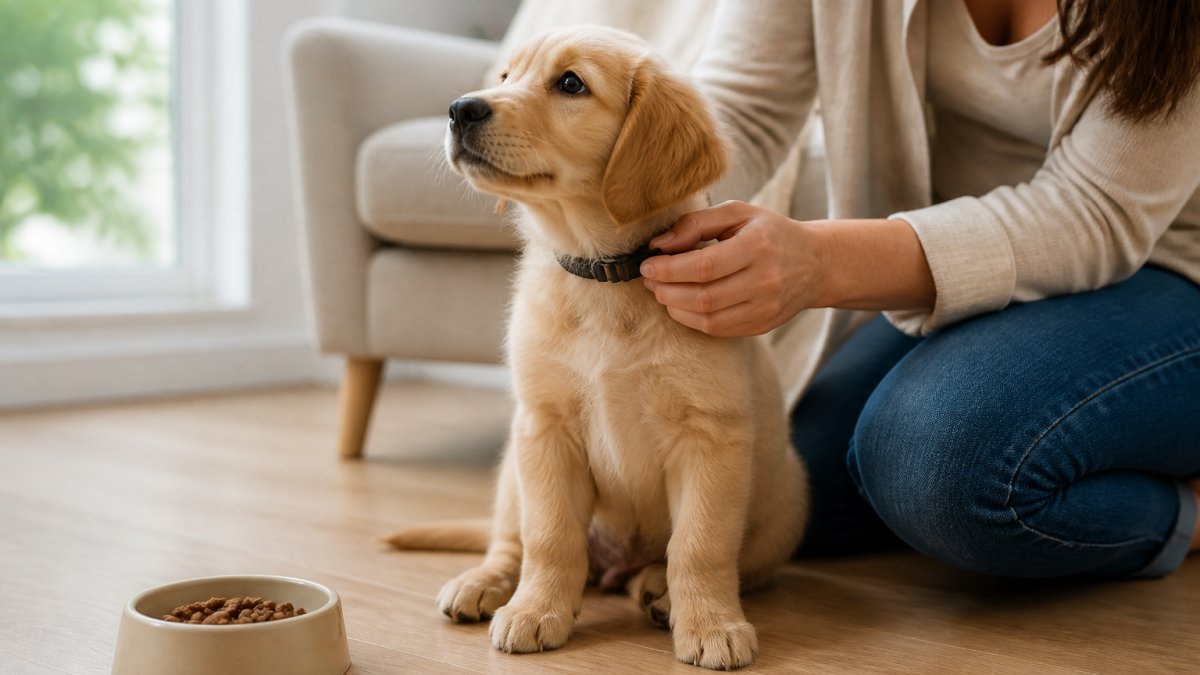
Let Your Puppy Sniff and Explore First
Before the collar ever touches the neck, let your puppy investigate it. Place it on the floor and reward any calm sniffing with praise or a treat.
This is desensitization in its simplest form. The collar becomes a normal object, not a threat. Repeat this for a day or two, then move to touching the collar to the neck for a second, treating, and removing it.
First Wear: Short Sessions and Treats
Clip the collar on, feed a treat, and take it off within a minute. That's the whole first session.
Over the next few days, stretch the time. Add a chew toy or a game during wear so the puppy links the collar to good things. Reward calm behavior, not just compliance. A puppy that sits quietly with the collar on is learning exactly what you want.
Signs Your Puppy Is Ready to Wear the Collar Longer
Don't advance on the calendar alone. Watch for these observable signs that your puppy is ready for more wear time or a leash:
- Ignores the collar. Your puppy stops scratching at it and goes back to playing, chewing, or resting.
- Calm body language. Relaxed ears, soft eyes, and a normal tail position while the collar is on.
- Comes to you when the collar appears. A puppy that approaches the collar instead of backing away is telling you the association is positive.
If you see the opposite, freezing, pawing, backing away, or refusing treats, you've moved too fast. Drop back one stage and rebuild. Puppies move through a plan like this at different speeds, and a sensitive puppy may need more time.
How Long for a Puppy to Get Used to a Collar?
Most puppies accept a collar within one to two weeks of short daily sessions. Some settle in a few days; sensitive puppies may take three weeks.
Progress looks like this: less scratching, calmer body language, and eventually ignoring the collar entirely. If your puppy still fights it after three weeks, slow down and shorten sessions rather than pushing harder.
Troubleshooting Scratching, Freezing, and Resistance
Collar problems often relate to fit or material, so it helps to rule those out before assuming the puppy is afraid.
Scratching or Pawing at the Collar
Scratching can sometimes be a comfort problem rather than a training problem. Check these in order:
- Fit. Slide two fingers under the collar. If you can't, it's too tight; if it slides over the head, it's too loose.
- Material. Stiff leather or thick nylon can rub. Switch to a thin, soft nylon or suede collar for training.
- Tags. A dangling ID tag banging against the throat startles some puppies. Remove tags during early training and add them once the collar is accepted.
- Skin check. Look for redness, rubbing, or hair loss at the throat. If you see any, take the collar off and let the skin rest before trying again.
If fit and material are fine and the scratching continues, shorten sessions and pair wear with a chew toy so the puppy's mouth has a job. For crystal collars, see how to clean Swarovski dog collars safely.
Freezing or Going Still
A puppy that freezes may be overwhelmed, and pushing through it can teach the puppy that the collar predicts unpleasant things.
- End the session immediately and remove the collar.
- Drop back one stage in the plan and rebuild with shorter wears.
- Pair the next wear with high-value treats, small pieces of chicken or cheese, not kibble.
Backing Away, Bolting, or Hiding
This may be a fear response, which can happen when things move too quickly. Go back to Stage 1 (sniffing the collar on the floor) and rebuild slowly. If your puppy hides when the collar appears, stop reaching toward the neck for a few days and instead reward any approach to the collar.
Biting or Mouthing the Collar
Puppies explore with their mouths, and a collar is a new, chewable object. Redirect rather than punish:
- Offer a chew toy the moment your puppy mouths the collar.
- Keep early sessions short so boredom doesn't turn into chewing.
- Avoid dangling tags during training, since they invite grabbing.
When to Pause or Seek Professional Help
Never force a collar onto a struggling puppy. Forced wear can build fear, and slow, gentle introductions are generally a kinder approach.
Collar Safety Checks Beyond Fit
Fit is only part of safety. A few habits prevent the most common collar injuries:
- Remove the collar for unsupervised crate time and naps. A collar can snag on crate bars or a puppy's own paw.
- Inspect the collar weekly. Check for fraying, a stiff buckle, or a cracked D-ring, and replace anything worn.
- Use a breakaway or quick-release buckle during training. If the collar snags, it releases rather than choking.
Puppy Leash Training After the Collar Is Accepted
Once your puppy wears the collar calmly, leash training can begin. Start indoors with a light leash clipped on and let your puppy drag it for a minute while you reward calm behavior.
Then lure your puppy a few steps with a treat and praise every loose-leash moment. Keep sessions short. Our guide to the best dog harness for small breeds covers how to choose one.
Shop Personalized Collars at Aventura Pups
A collar your puppy accepts is a collar you'll keep for years, so it's worth choosing one you love looking at. Aventura Pups offers personalized dog collars at $19.00, including the 10 mm Pink Sparkle, which features a little shine.

Frequently Asked Questions
At what age should a puppy start wearing a collar?
Most puppies can start wearing a lightweight collar around 8 weeks old, once they are home and settled. Begin with short sessions of a few minutes and build up gradually. A puppy collar should sit snug but allow two fingers to slide underneath. Wait until your puppy is comfortable wearing it before attaching a leash, and check with your veterinarian about outdoor walks and vaccination timing.
How long does it take for a puppy to get used to a collar?
Most puppies accept a collar within a few days to two weeks of short, positive sessions. Some adjust in a single afternoon; more sensitive puppies may need closer to two weeks. The pace depends on your puppy's temperament and how gradually you introduce it. Reward calm behavior, keep sessions brief, and never force the collar on. If your puppy still panics after two weeks, slow down and pair the collar with higher-value treats.
What should I do if my puppy scratches or freezes when wearing a collar?
Scratching and freezing are normal first reactions. Distract with a treat or a quick game the moment the collar goes on, and remove it before your puppy starts pawing at it. Keep sessions to two or three minutes at first. Never scold the behavior. If freezing continues, try a lighter or narrower collar and reward any relaxed movement. Pairing the collar with meals and play teaches your puppy that it predicts good things.
Should I use treats to help my puppy accept a collar?
Yes. Treats and praise are the fastest way to build a positive association with a puppy collar. Show the collar, reward a sniff, then reward calm behavior while it is on. Use small, high-value treats and keep sessions short so your puppy stays engaged. Over a few days, phase the treats down to occasional rewards and praise. This positive reinforcement approach works far better than holding a puppy down or forcing the collar on.
Training a puppy to wear a collar takes patience, short sessions, and a collar that actually fits. If you want a first collar that's as well made as it is pretty, Aventura Pups can help. Our personalized collars feature handcrafted lettering, soft materials, and sizes from extra-extra-small to large. Get started with Aventura Pups and find a collar your puppy will happily wear.

