



Last Updated: October 27, 2026
Quick Summary
Couture dog clothing is comfortable for some dogs in some situations, but the label alone does not guarantee comfort. Comfort depends on fit, fabric, and how the dog moves. Breathable, well-fitting pieces suit short wear, while heavily embellished designs can rub or trap heat.
- Measure chest girth, neck, and back length before comparing any size chart.
- Match fabric to the duration and setting of wear.
- Tulle, sequins, and stiff tweed suit short, supervised occasions only.
- Two fingers should slide under the chest and neck openings.
- Stop wearing the garment if skin redness or irritation appears, and consult a veterinarian.
Table of Contents
- What Makes Couture Dog Clothing Different From Everyday Dog Apparel
- How to Measure a Dog for Clothes Before You Buy
- Best Fabrics for Dog Clothing and How They Feel on the Body
- When Dogs Need Sweaters and When Clothing Is Unnecessary
- Signs a Dog Dislikes Wearing Clothes
- A Practical Comfort Checklist for Evaluating a Garment
- Choosing a Comfortable Piece for Your Dog Today
- Frequently Asked Questions
What Makes Couture Dog Clothing Different From Everyday Dog Apparel
Couture dog clothing is comfortable for some pets in some situations, but the label alone tells you very little. At Aventura Pups, we offer designer dog clothes. Comfort depends on fit, fabric, and how the dog moves.
Couture pieces usually emphasize decorative detail, structured silhouettes, and layered textures such as tulle, sequins, or tweed. Everyday functional apparel tends to prioritize simple cuts, stretch, and easy on-and-off access. Neither approach is automatically better. A decorative piece worn for a short photo session asks very different things of a dog's body than a sweater worn on a winter walk.
The research on this topic is still limited. A 2026 study in PubMed Central examined simulated clothing pressure on companion dogs in relation to body size, movement, and fabric type, which is the kind of evidence that matters here. Veterinary and behavior sources also warn that tight clothing can reduce ventilation and increase humidity, which can predispose dogs to skin problems. Treat any garment as something to evaluate, not something to assume is harmless.
How to Measure a Dog for Clothes Before You Buy
Accurate measurements prevent most comfort problems before they start. Measure your dog while she is standing naturally, not arched or hunched. Measure chest girth at the widest point behind the front legs, neck at the base, and back length from the base of the neck to the base of the tail. Write each number down before you compare it to any size chart.
Odd-sized dogs, like one that falls between small and medium, often need a closer look at the chart. Check whether the brand lists chest and back length separately, since a garment can fit the chest but sit too long or short.
Best Fabrics for Dog Clothing and How They Feel on the Body
Fabric matters as much as cut, and the biggest mistake buyers make is treating "dog clothes" as one category. A cotton tee, an acrylic sweater dress, and a sequined occasion dress ask completely different things of a dog's skin and thermoregulation. The table below compares the constructions you are most likely to encounter, with the trade-offs that actually affect comfort.
| Construction | Typical feel | Breathability | Heat retention | Washability | Best use case | Main comfort risk |
|---|---|---|---|---|---|---|
| Lightweight cotton or cotton-blend knit | Soft, slightly cool | High | Low | Machine wash, gentle | Mild weather, indoor wear, sensitive skin | Shrinks or stretches out of shape; thin fabric can chafe at seams |
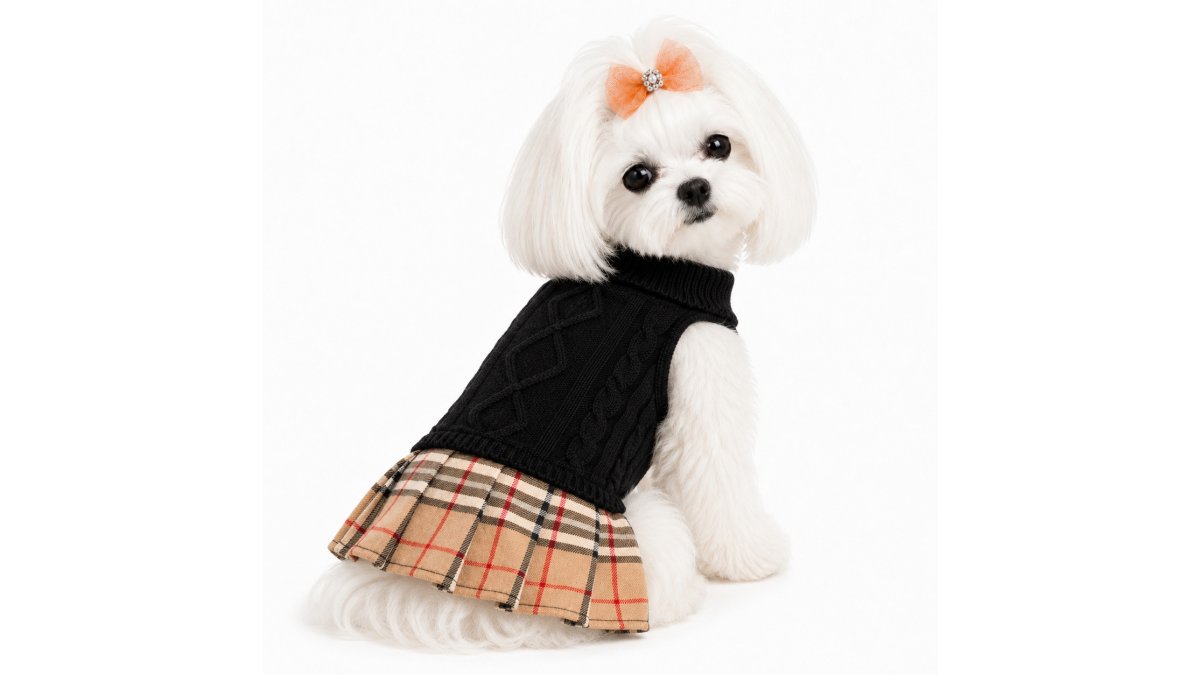
| Acrylic double-knit (e.g., our Plaid Sweater Dress, $55.00, 100% acrylic) | Soft, springy, holds shape | Moderate | Moderate to high | Machine wash cold, lay flat | Cool-weather walks, layering | Can trap heat indoors; pills with friction |
| Fleece or brushed polyester | Plush, warm | Low to moderate | High | Machine wash, air dry | Cold-weather outings for short-coated dogs | Overheating once indoors; matting on long coats |
| Quilted or padded outerwear | Structured, heavier | Low | High | Spot clean or gentle cycle | Rain, snow, extended cold | Restricts shoulder movement if cut too narrow |
| Tulle, sequin, or embellished occasion wear (e.g., our Daisy Sequin Pink dress, $75.00) | Light but stiff; textured | Low to moderate | Low | Hand wash or spot clean | Short, supervised photo or event wear | Sequins and tulle catch on fur, rub armpits, and scratch skin |
| Stiff tweed or structured tailoring | Firm, non-stretch | Low | Moderate | Dry clean typically | Brief display or photo use | Limits range of motion at the chest and legs |
A few mechanisms explain most of these differences. Breathability depends on how easily air and moisture vapor move through the weave; tightly woven or coated fabrics trap humidity against the skin, and veterinary behavior sources warn that trapped moisture plus reduced ventilation can predispose dogs to skin irritation. Heat retention depends on loft and lining: a fleece lining holds a layer of warm air, which is helpful outdoors in cold weather and unhelpful the moment the dog comes inside. Skin contact depends on seam placement and trim: flatlock seams and covered edges are gentler than exposed serged seams, and any hard embellishment near the armpit, belly, or neck will rub during movement.
A practical rule: match the fabric to the duration and setting of wear. Breathable knits for indoor and mild-weather use, insulated or quilted fabrics for cold outdoor walks, and embellished or structured pieces for short, supervised occasions only. Whatever the fabric, check that it is washable in a way you will actually do, a garment that needs dry cleaning after every wear tends to stay in the closet, and a dirty garment against skin is its own comfort problem.
When Dogs Need Sweaters and When Clothing Is Unnecessary
Many dogs with short coats or small body size may appreciate a layer in cold weather, while dogs with thick double coats often do not need one. Clothing is unnecessary in mild weather and can cause overheating in warm conditions. A dog that is healthy, comfortable, and moving freely in its natural coat usually does not need extra layers.
Signs a Dog Dislikes Wearing Clothes
Consult your veterinarian if skin redness, hair loss, or irritation develops under the garment, or if your dog shows signs of heat stress that do not resolve quickly after the clothing is removed.
A Practical Comfort Checklist for Evaluating a Garment
Before you wear a piece for more than a short time, run through these checks:
- Chest and neck openings allow two fingers to slide underneath
- No seams, sequins, or trims rub the armpits or belly
- The dog can sit, lie down, and climb stairs without the garment shifting
- The fabric feels soft to your touch and breathes in warm weather
- Fasteners and leash openings are easy to access without tugging
- You can remove the piece quickly if the dog shows discomfort
Choosing a Comfortable Piece for Your Dog Today
Start with your dog's measurements, the weather you will actually face, and how she behaves in clothing. Our Daisy Sequin Pink dress is $75.00, and the Plaid Sweater Dress is $55.00. Browse our sweaters collection to compare options, and read our guide on tips for buying dog clothes online before you order.

Frequently Asked Questions
Is couture dog clothing comfortable for pets?
It can be, but comfort depends on the garment rather than the label. The Aventura Pups Plaid Sweater Dress is $55.00 and is made of 100% acrylic. Watch the dog for signs of discomfort.
How do I know if a dog likes wearing clothes?
Look for relaxed body language while the garment is on. A dog that enjoys wearing clothes will walk, play and settle normally. Signs of dislike include freezing, hunching, tail tucking, repeatedly pawing or rubbing at the garment, and trying to back out of it. Start with short sessions of a few minutes indoors, reward calm behavior, and build up gradually. If your dog shows distress, stop and try a looser or simpler design, or skip clothing for that dog.
How do I measure my dog for clothes?
Measure the neck where a collar sits, the chest at its widest point just behind the front legs, and the back length from the base of the neck to the base of the tail. Compare these numbers to the brand's size chart rather than relying on breed or weight, since body shapes vary. Dogs that fall between sizes, like a small-medium mix, often need the larger size with adjustments at the neck. Pieces with a back opening, such as the Plaid Sweater Dress, make it easier to check the fit at the shoulders and chest.
Is it worth paying more for designer dog clothing?
Aventura Pups' Daisy Sequin Pink, Blue Hyacinth, Pink Peony and Multi Hibiscus dresses are each priced at $75.00, and the Plaid Sweater Dress is $55.00.

